
Tag: Arnold
Showing all articles tagged with "Arnold"
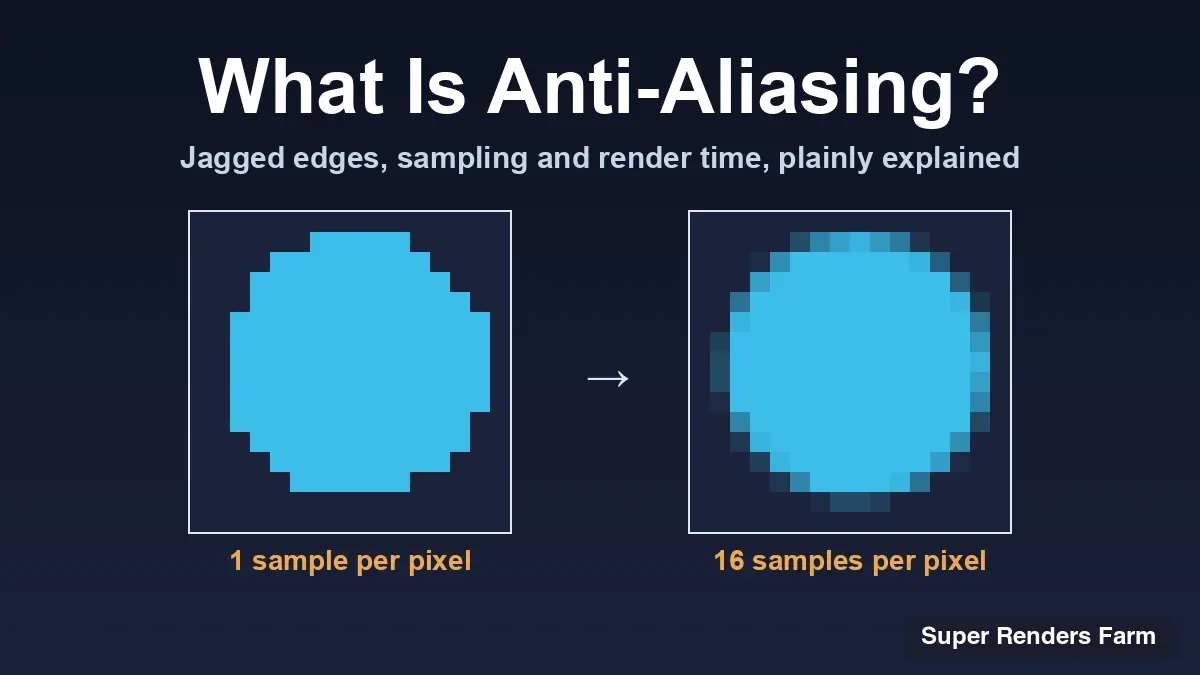
What Is Anti-Aliasing? Jagged Edges, Samples and Render Time Explained
Anti-aliasing smooths the jagged edges that appear when a scene is drawn on a pixel grid. Here is how sampling explains it, what game settings like MSAA and TAA do, and why AA samples are render time.
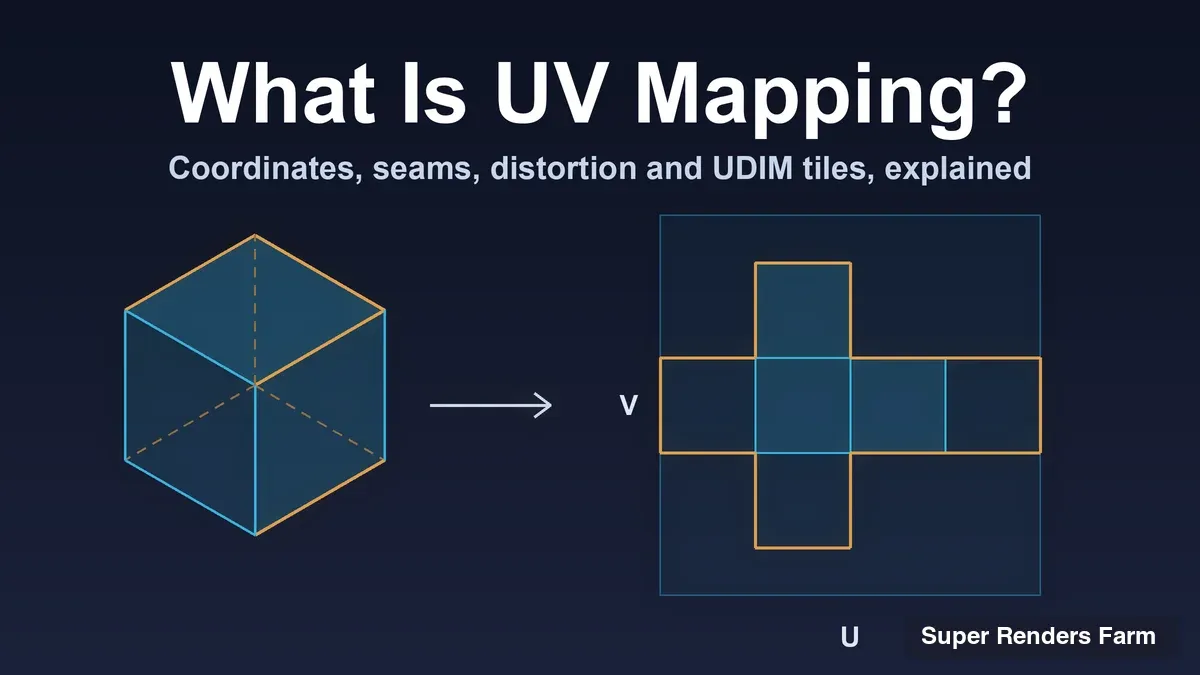
What Is UV Mapping? How UV Coordinates, Seams, Distortion and UDIM Tiles Work
UV mapping gives every point on a 3D surface a position on a 2D texture. Here is how UV coordinates, seams, stretching, texel density and UDIM tiles work, and why tile paths matter on a farm.
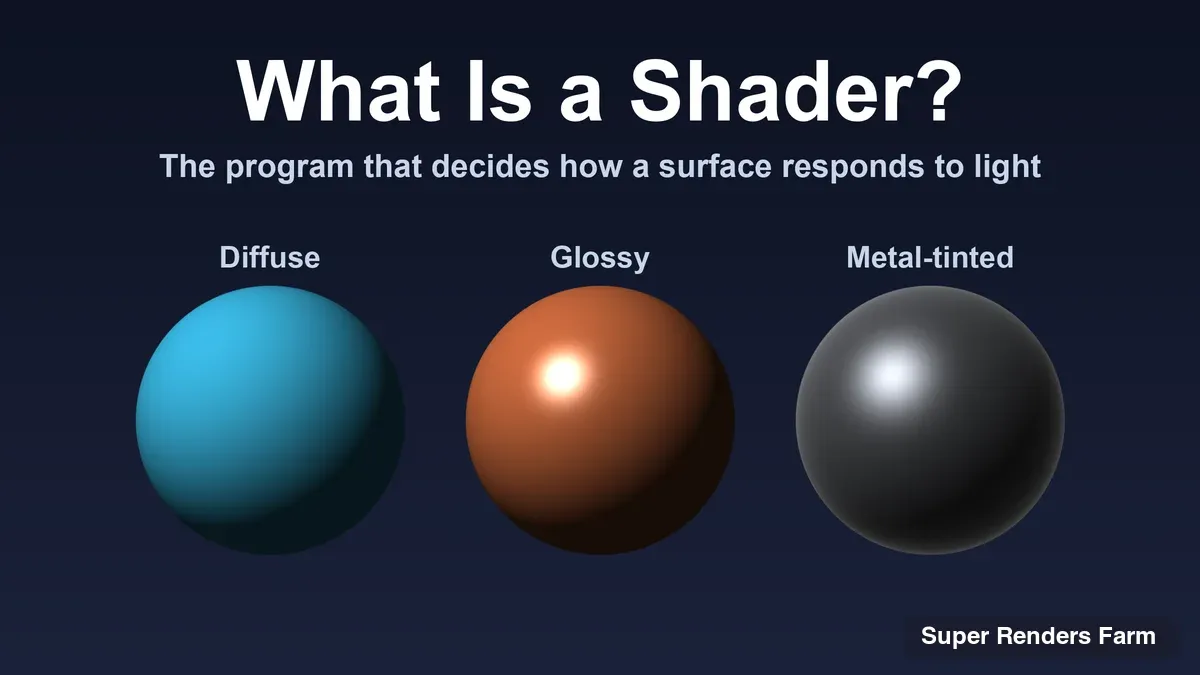
What Is a Shader? How Shaders Decide What a Surface Looks Like
A shader is a small program that decides how a surface responds to light. Here is what shaders take in, how real-time and offline shaders differ, and why they change render time.
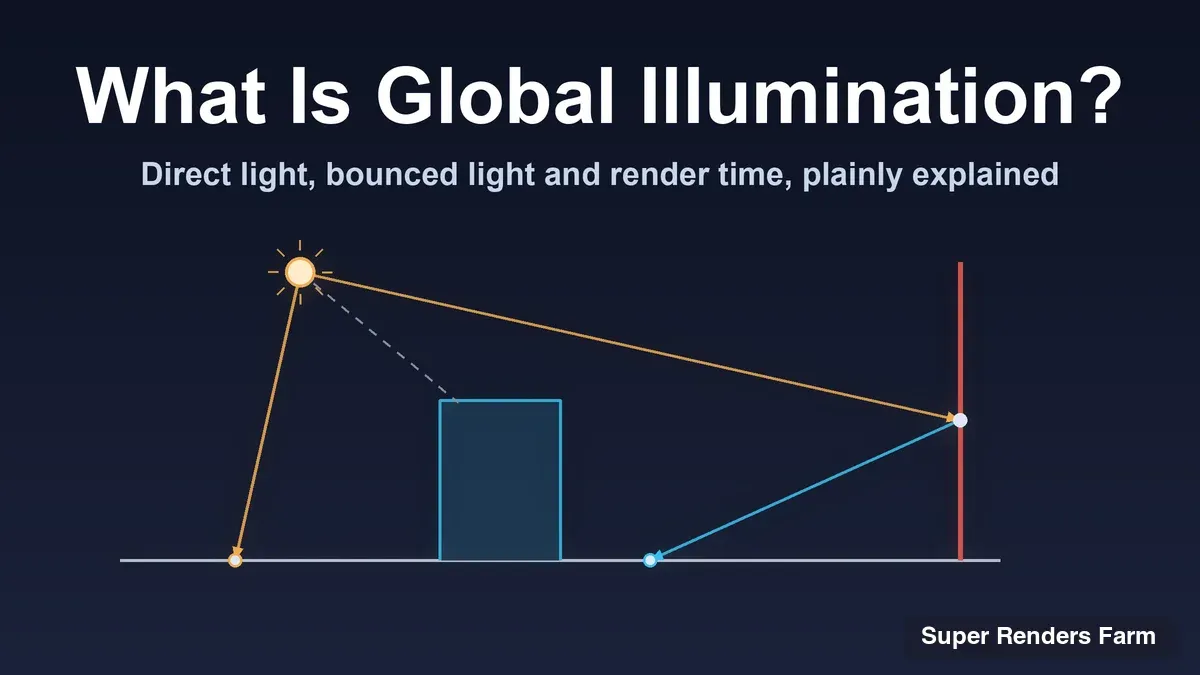
What Is Global Illumination? How Bounced Light Shapes Realism and Render Time
Global illumination is the light that reaches a surface after bouncing off other surfaces. Here is how bounces, path tracing, light caches and baked GI work, and why bounce count drives render time.
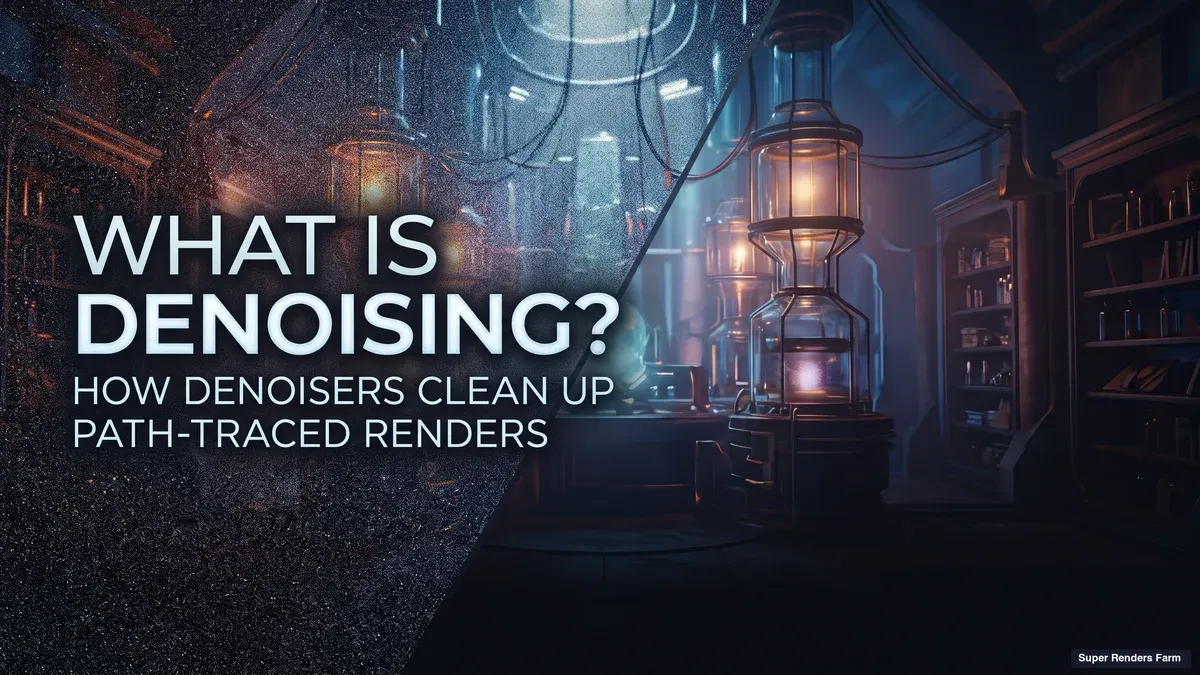
What Is Denoising? How Denoisers Clean Up Path-Traced Renders
Denoising removes the grain a path-traced render carries when it stops sampling early. Here is how denoisers work, which ones you will meet, and where they smear detail or flicker.
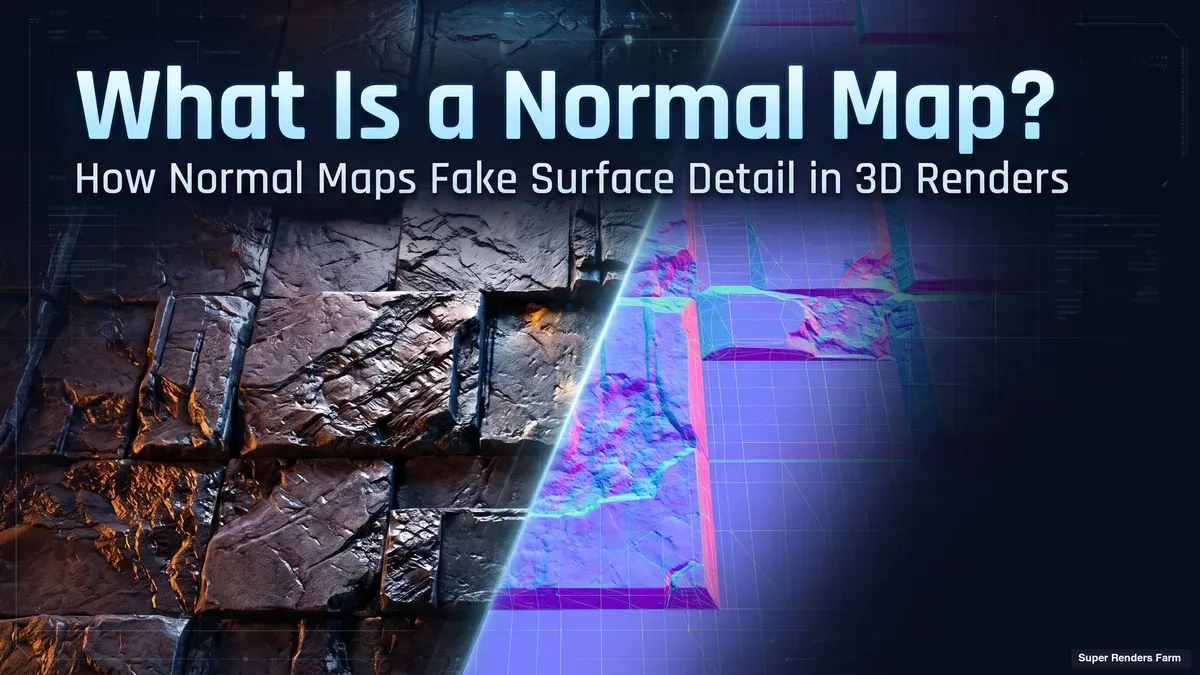
What Is a Normal Map? How Normal Maps Fake Surface Detail in 3D Renders
A normal map stores a surface direction in every pixel, so a flat surface can be lit as if it had bumps. Here is how it works, how it differs from bump and displacement, and what each costs to render.
What Is Motion Blur? How Shutter Time Shapes 3D Renders and Render Times
Motion blur is the streak a moving object leaves during one exposure. Here is how shutter time creates it, how 3D renderers simulate it, why it raises render time, and when to add it in comp.
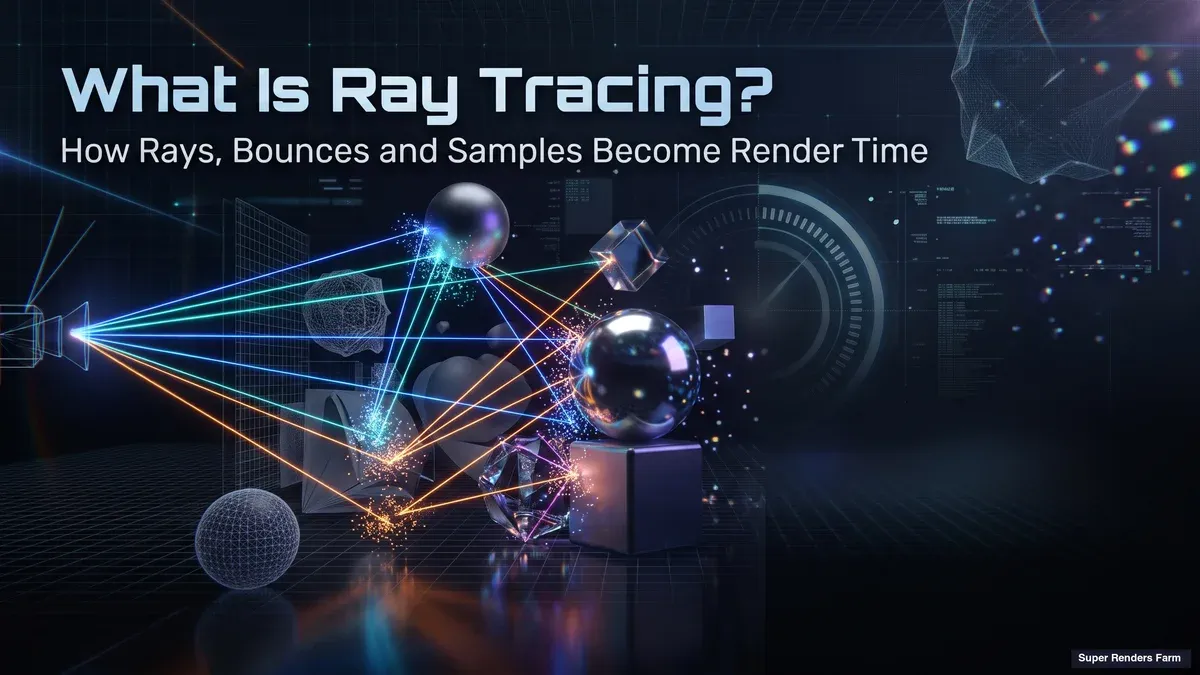
What Is Ray Tracing? How Rays, Bounces and Samples Become Render Time
Ray tracing finds each pixel's color by following rays of light through a scene. Here is how rays and bounces turn into render time, and how real-time RTX differs from offline rendering.
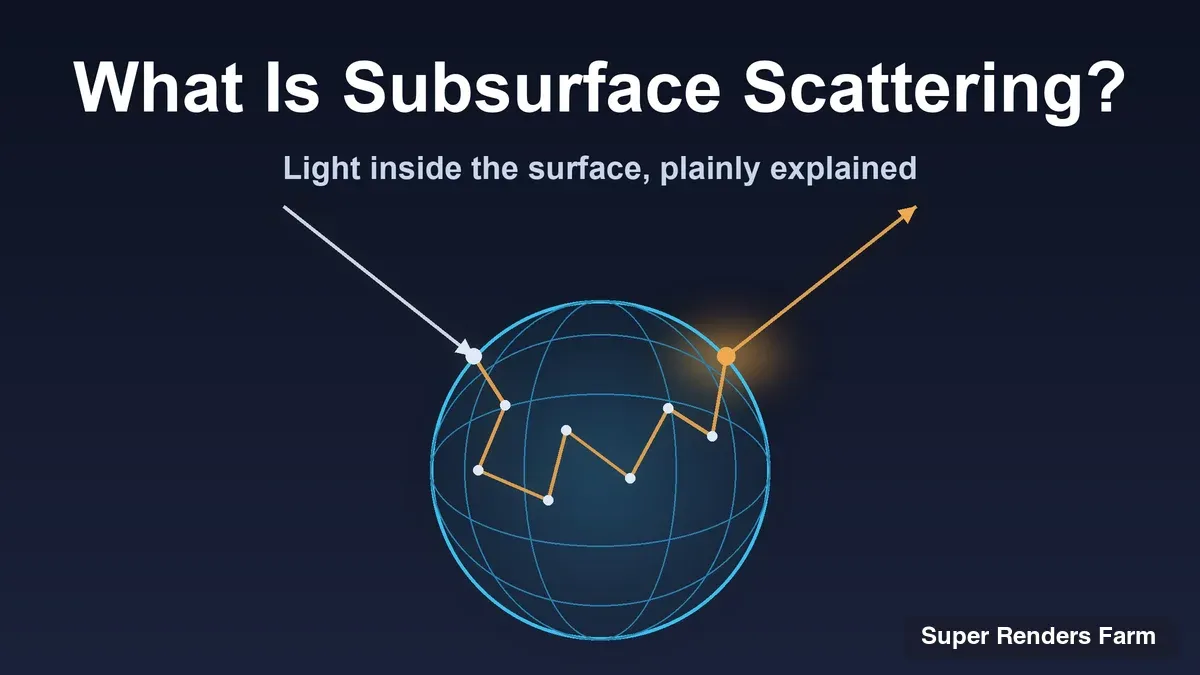
What Is Subsurface Scattering? How Light Inside a Surface Shapes 3D Renders
Subsurface scattering is light entering a translucent surface, bouncing around inside and leaving somewhere else. Here is how renderers model it and why it adds render time.
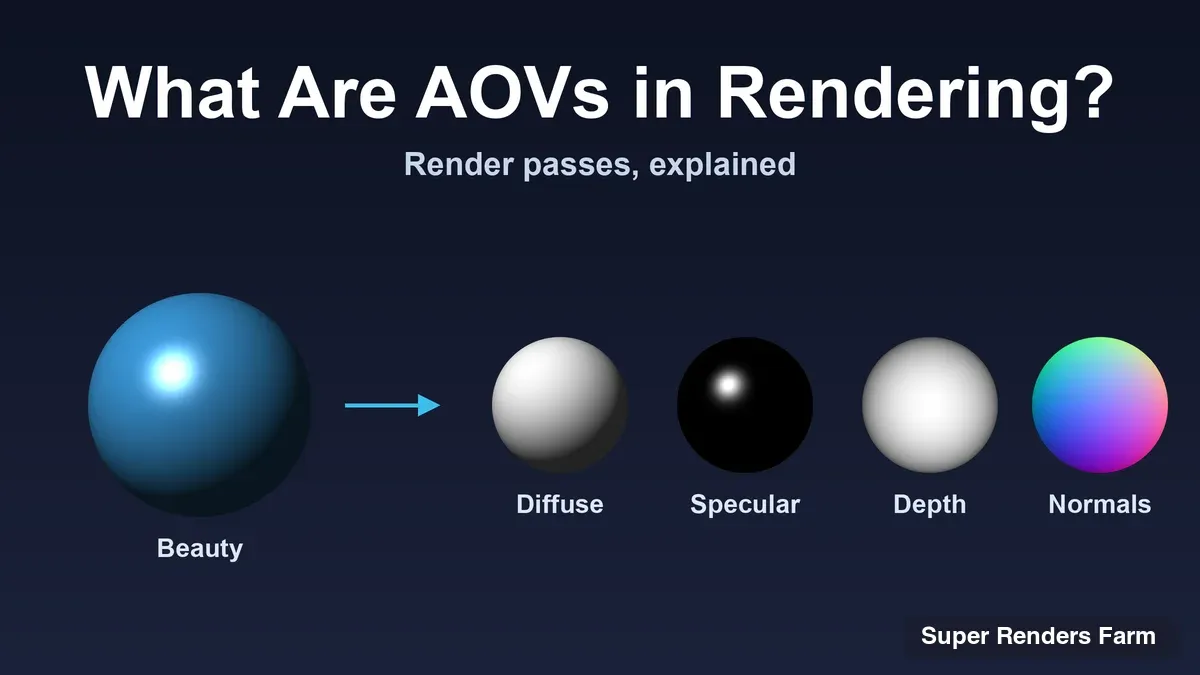
What Are AOVs in Rendering? Render Passes, Naming and Output Explained
AOVs are Arbitrary Output Variables: extra images a renderer writes next to the beauty pass. Here is what they hold, how each engine names them, and what they change on a render farm.