
Guides
In-depth guides for 3D artists — render farm workflows, software setup, scene optimization, and best practices for cloud rendering on Super Renders Farm.
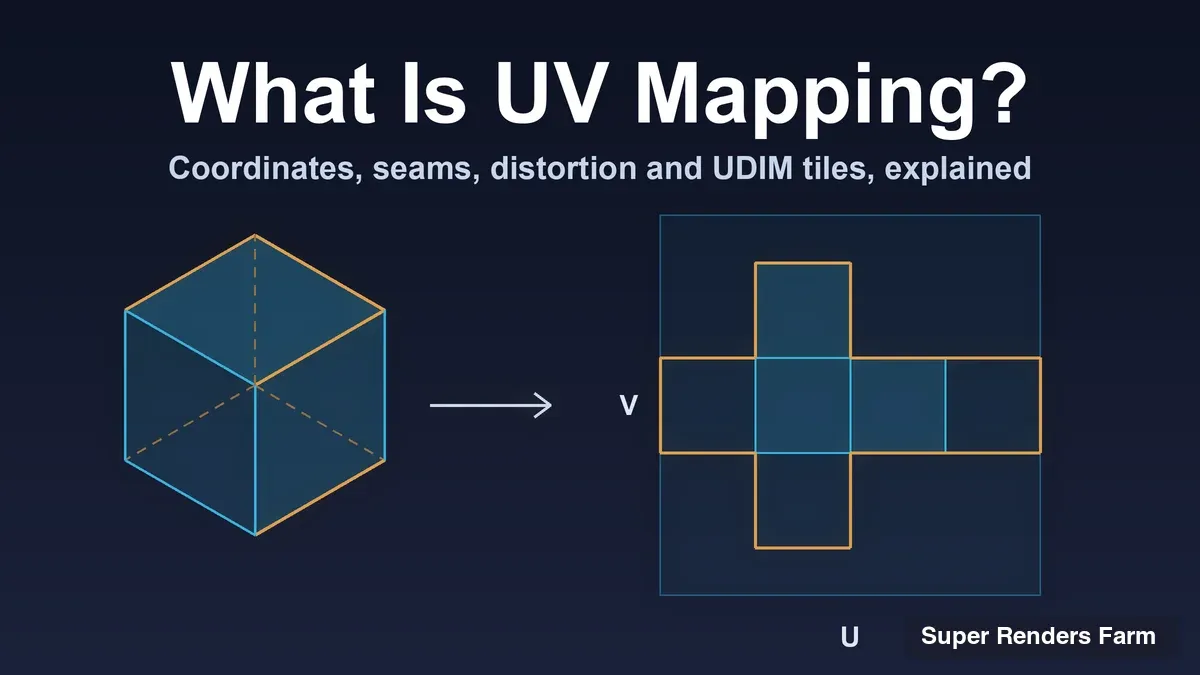
What Is UV Mapping? How UV Coordinates, Seams, Distortion and UDIM Tiles Work
UV mapping gives every point on a 3D surface a position on a 2D texture. Here is how UV coordinates, seams, stretching, texel density and UDIM tiles work, and why tile paths matter on a farm.
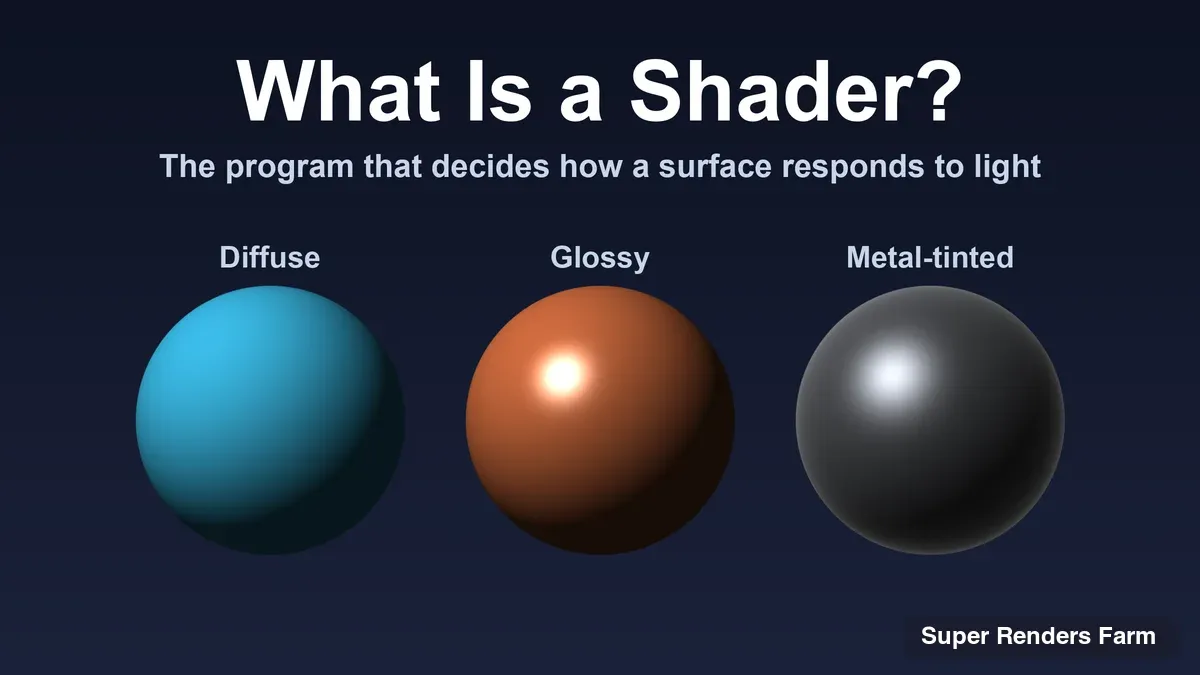
What Is a Shader? How Shaders Decide What a Surface Looks Like
A shader is a small program that decides how a surface responds to light. Here is what shaders take in, how real-time and offline shaders differ, and why they change render time.
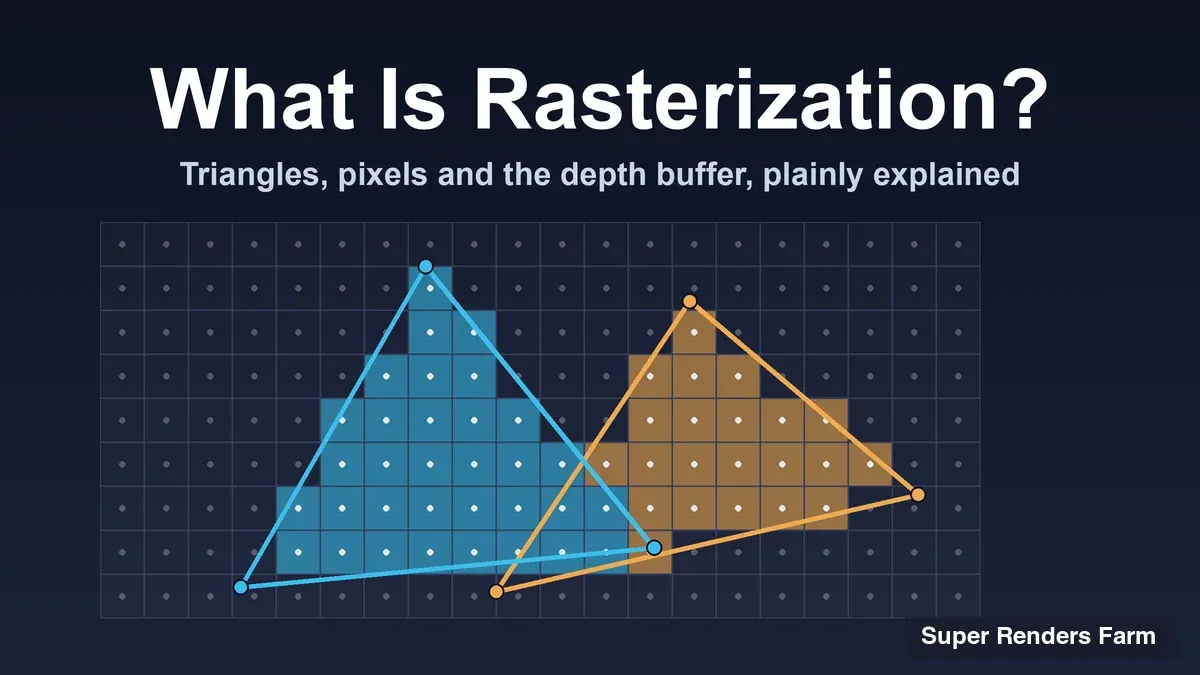
What Is Rasterization? How Triangles Become Pixels in 3D Rendering
Rasterization turns 3D triangles into pixels by finding which pixels each triangle covers and keeping the nearest one. Here is the pipeline, its limits, and why frame count still matters on a farm.
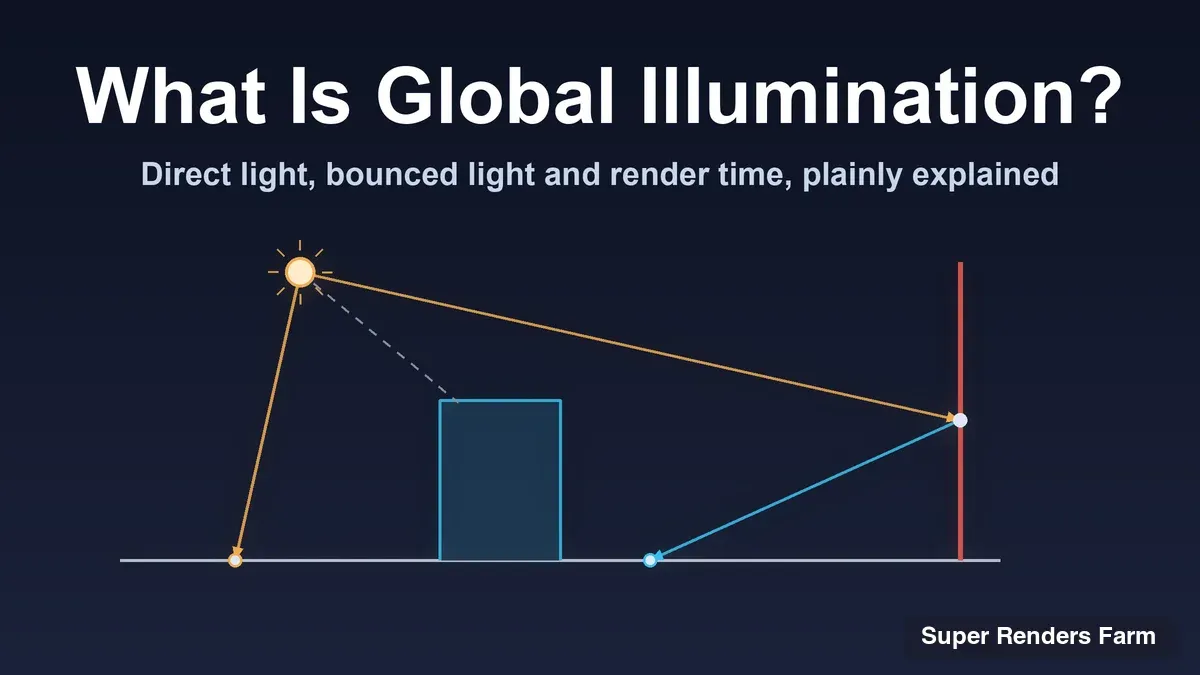
What Is Global Illumination? How Bounced Light Shapes Realism and Render Time
Global illumination is the light that reaches a surface after bouncing off other surfaces. Here is how bounces, path tracing, light caches and baked GI work, and why bounce count drives render time.
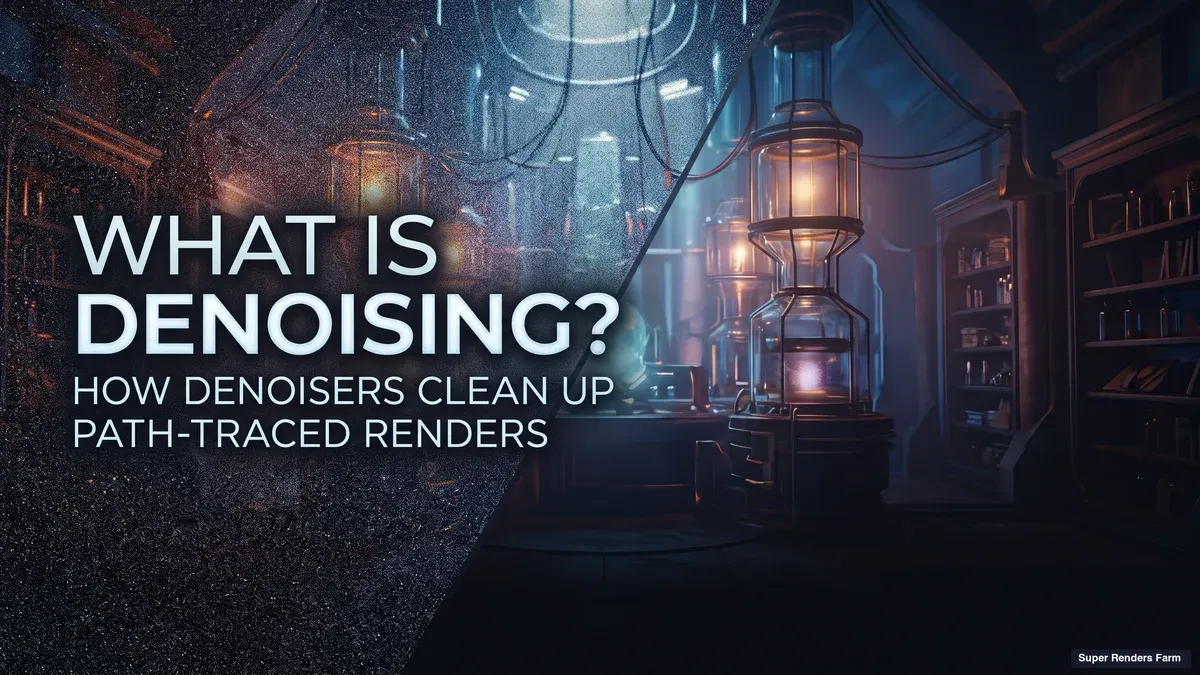
What Is Denoising? How Denoisers Clean Up Path-Traced Renders
Denoising removes the grain a path-traced render carries when it stops sampling early. Here is how denoisers work, which ones you will meet, and where they smear detail or flicker.
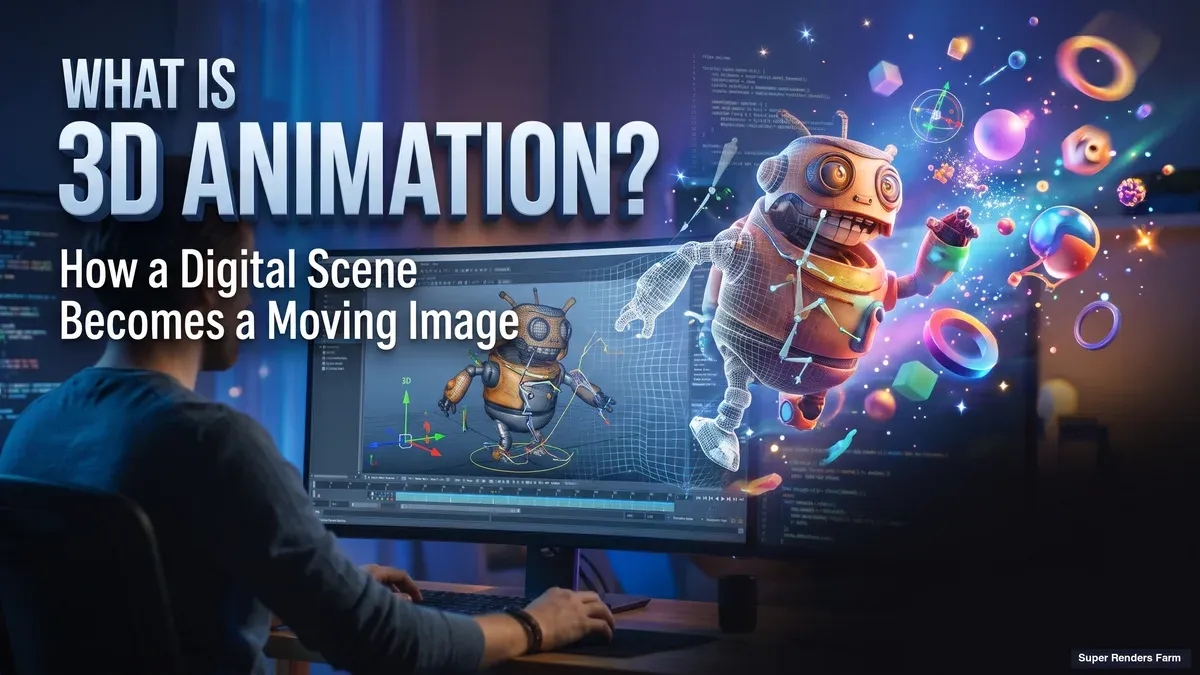
What Is 3D Animation? How a Digital Scene Becomes a Moving Image
3D animation turns digital models into moving images through modeling, rigging, animation, lighting, rendering and compositing. Here is how each stage works and why rendering needs the most compute.
What Is Motion Graphics? Definition, Tools and When a Job Outgrows Your Workstation
Motion graphics is animated type, shapes and imagery made to communicate. Here is how it differs from animation and VFX, the tools designers use, and when a job outgrows a workstation.
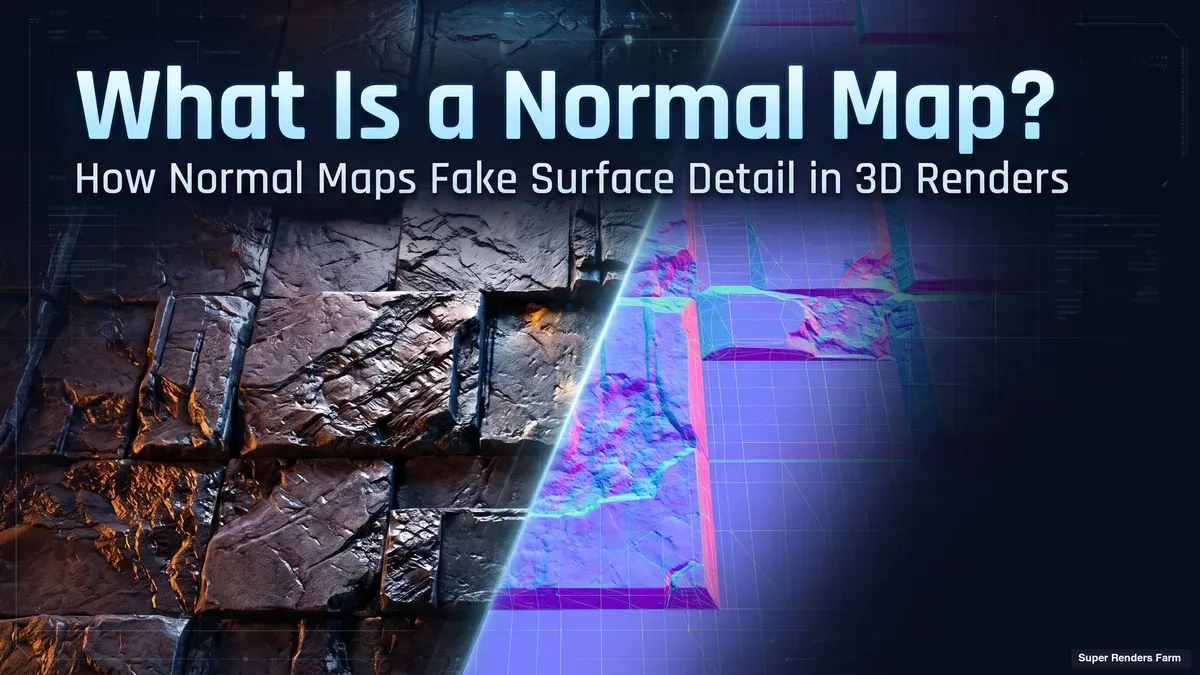
What Is a Normal Map? How Normal Maps Fake Surface Detail in 3D Renders
A normal map stores a surface direction in every pixel, so a flat surface can be lit as if it had bumps. Here is how it works, how it differs from bump and displacement, and what each costs to render.
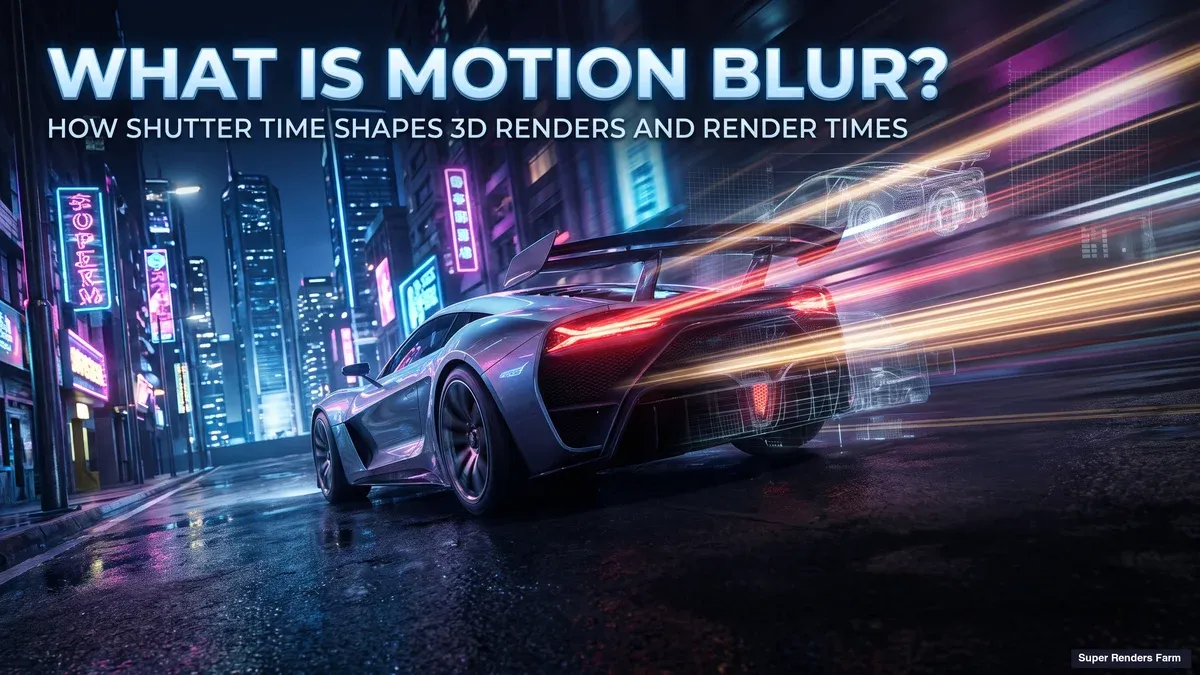
What Is Motion Blur? How Shutter Time Shapes 3D Renders and Render Times
Motion blur is the streak a moving object leaves during one exposure. Here is how shutter time creates it, how 3D renderers simulate it, why it raises render time, and when to add it in comp.
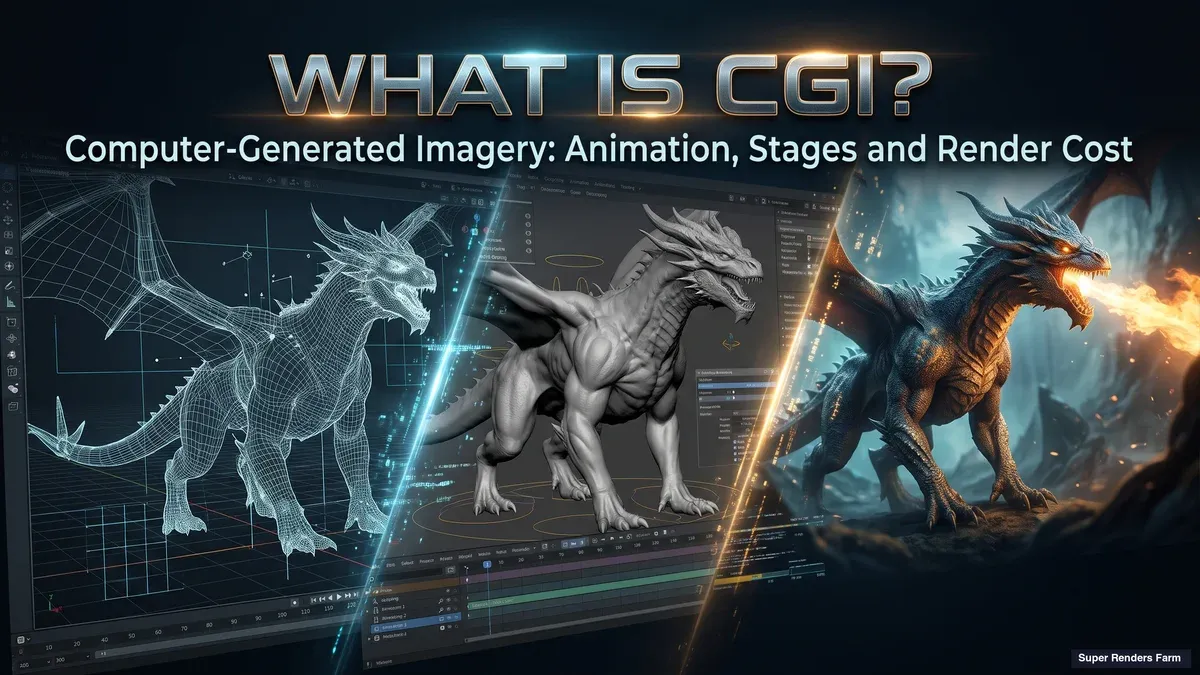
What Is CGI? Computer-Generated Imagery Explained: Animation, Stages and Render Cost
CGI is any image made with computer graphics, still or moving. Here is what that covers, how it differs from animation and VFX, and why a shot costs frames times minutes of compute.