iRender vs Super Renders Farm: 2026년 나란히 비교
개요
소개
2026년 GPU 프로젝트 — Redshift, Octane, V-Ray GPU, 또는 4K 씬에서의 Blender Cycles — 를 위해 클라우드 렌더팜 가격을 알아보다 보면, iRender와 Super Renders Farm은 거의 항상 나란히 등장합니다. 두 서비스 모두 베트남에서 운영되고, GPU 가격에 공격적이며, 요금을 공개하고 있습니다. 하지만 두 서비스는 렌더링 문제를 매우 다른 방식으로 해결합니다. 어느 쪽이 맞는지는 대부분 표면 가격보다 렌더 파이프라인을 얼마나 직접 운영하고 싶은지에 달려 있습니다.
한마디로, Super Renders Farm은 풀 매니지드 클라우드 렌더팜입니다. 웹 대시보드로 씬을 제출하면 오퍼레이터가 머신을 관리하고, 요금은 렌더 시간 기준 초 단위로 청구되며 원격 데스크톱 세션은 필요하지 않습니다. iRender는 IaaS(서비스형 인프라) 제공업체로, GPU 머신 전체를 시간 단위로 임대해 RDP(원격 데스크톱 프로토콜)로 직접 운영하는 방식입니다.
저희는 Super Renders Farm을 2010년부터 운영해 왔습니다(법인 설립은 2017년). iRender는 그 내내 눈에 띄는 경쟁사였습니다. iRender의 RDP 워크플로우에 피로감을 느끼고 저희를 찾아온 고객도 있었고, 렌더링 환경을 직접 제어하고 싶어서 iRender로 떠난 고객도 있었습니다. 어느 쪽도 보편적으로 더 나은 선택지가 아닙니다 — 두 서비스는 서로 다른 유형의 사용자를 위해 만들어졌기 때문입니다.
이 비교에서의 모든 내용은 각 회사의 공개 가격 및 문서 페이지에서 가져왔습니다. iRender의 하드웨어, 가격, 파트너십, 데이터센터 관련 세부 정보는 2026년 9월 15일에 iRender의 라이브 페이지를 기준으로 다시 확인했으며, 나머지 스냅샷은 2026년 4월 기준입니다. 특히 iRender의 GPU 요금과 충전 보너스 같은 가격 정보는 자주 바뀌니, 프로젝트에 착수하기 전에 라이브 페이지를 꼭 확인합니다. 클라우드 렌더팜 가격이 실제로 어떻게 작동하는지 더 넓은 맥락을 원한다면, 저희의 렌더팜 가격 모델 비교 가이드에서 주요 청구 단위와 왜 두 렌더팜이 같은 작업에 대해 완전히 다른 견적을 낼 수 있는지 다루고 있습니다.
빠른 답변: 어떤 서비스가 내 상황에 맞을까요?
한 줄로 말하면, 머신을 관리하지 않고 씬을 제출해 프레임을 받고 싶다면 Super Renders Farm이 그 용도에 맞게 만들어졌고, 임대한 GPU 머신을 RDP로 완전히 직접 제어하고 싶다면 iRender가 그 용도에 맞게 만들어졌습니다. 아래의 심층 분석에서는 가격, 하드웨어, 워크플로우를 자세히 다루며, 아래 표에서는 일반적인 프로덕션 프로필에 따라 더 잘 맞는 서비스를 확인할 수 있습니다. 모든 주장은 이후 상세 섹션에서 근거를 제시합니다. 마지막 행은 두 렌더팜이 뚜렷하게 다른 신뢰 신호를 공개하는 유일한 지점입니다 — iRender는 ISO 27001, ISO 20000, ISO 9001:2000 인증을 갖춘 공인 Tier III 데이터센터를 명시하는 반면, Super Renders Farm은 특정 인증을 주장하지 않습니다.
| 상황 | iRender가 더 적합한 경우 | Super Renders Farm이 더 적합한 경우 |
|---|---|---|
| 아키비즈 스튜디오 (V-Ray / Corona) | 자체 V-Ray 또는 Corona 라이센스를 보유하고, Forest Pack이나 RailClone 같은 플러그인 빌드에 대한 RDP 제어를 원하는 경우. | V-Ray·Corona 라이센스가 포함되어 있고(엔진별 추가 요금 없음), 오퍼레이터가 렌더 전에 씬 에셋과 플러그인 버전을 검증하며, 유휴 반복 작업 시간이 과금되지 않는 경우. |
| 게임 시네마틱 스튜디오 | 렌더링 호스트에 커스텀 파이프라인 통합이나 맞춤형 DCC 빌드(Unreal Movie Render Queue, 실험적 Karma 등)를 직접 설치해야 하거나, 멀티 GPU Redshift·Octane 샷을 위해 한 머신에 RTX 5090 카드 최대 8장을 원하는 경우. | Maxon(Cinema 4D / Redshift) 및 Chaos(V-Ray / Corona) 파트너 공인 라이센스를 원하고, 오퍼레이터가 씬 검증을 담당하는 동안 팀이 샷 작업에 집중할 수 있는 경우. |
| VFX 스튜디오 (Houdini 시뮬레이션) | 특정 노드 RAM 구성이 필요하거나, 시뮬레이션 캐시 파이프라인을 위해 커스텀 Mantra / Karma / Redshift 빌드가 담긴 맞춤형 워크스테이션 이미지를 배포하고 싶은 경우. | RTX 5090 플릿에서 비용 효율적인 멀티 엔진 파이프라인(Houdini + Redshift + Karma XPU + V-Ray for Houdini) 접근과 오퍼레이터 관리 캐시 핸드오프가 필요한 경우. Houdini 클라우드 렌더팜 참고. |
| Cinema 4D 모션 디자인 | 렌더링 머신에 직접 설치 접근이 필요한 틈새 C4D 플러그인 빌드(실험적 Octane 릴리즈 또는 커스텀 Redshift 버전)를 사용하거나, 2023년 공식 Maxon 파트너십을 발표한 렌더팜의 멀티 GPU 노드에 Cinema 4D와 Redshift가 사전 설치되어 있기를 원하는 경우(Prime 등급 계정은 라이선스 사전 활성화, 그 외에는 자체 라이선스 지참). | 프로덕션 Cinema 4D + Redshift 릴리즈 빌드를 사용하고, Maxon 파트너 인증을 원하며, Octane / Redshift 라이센스가 포함되고, 머신-시간당이 아닌 렌더 시간 기준 초 단위 청구를 원하는 경우. |
| 인디 또는 개인 아티스트 (Blender / Cycles) | RDP에 익숙하고, Blender 애드온을 직접 설치하는 것을 선호하며, 배치 작업이 임대 시간을 충분히 채우는 경우. | 유효기간 없는 크레딧(가입 시 $25 무료)을 원하고, 반복 작업 시간이 과금되지 않는 렌더 시간 기준 초 단위 청구를 원하며, 원격 워크스테이션을 유지관리하고 싶지 않은 경우. |
| 엔터프라이즈 / 컴플라이언스 (ISO 27001 / SOC 2 / TPN 인증 요구) | 구매 체크리스트에 인증된 시설이 요구되는 경우: iRender는 자사 데이터센터가 Uptime Tier III 인증을 받았으며 ISO 27001(BS7799), ISO 20000(ITIL), ISO 9001:2000 인증을 보유하고 있다고 명시합니다. 착수 전에 인증서를 요청하고 어느 법인이 이를 보유하는지 확인하세요. | Super Renders Farm은 ISO 27001, SOC 2, TPN 인증을 보유하거나 주장하지 않습니다. 저희는 전송 중 및 저장 시 암호화(스토리지에 서버 측 AES-256)를 적용하여 NDA 기반 상업 및 아키비즈 작업을 처리하며, 요청 시 맞춤형 보안 검토를 지원합니다. |
이 표 각 행의 근거 — 가격 계산, 하드웨어 차이, 워크플로우 트레이드오프, 신뢰 신호 — 는 이후 섹션에서 자세히 다루고 있습니다. 자신의 씬 프로필에 맞춰 직접 검증해 보세요.
한눈에 보는 비교
| 항목 | iRender | Super Renders Farm |
|---|---|---|
| 본사 | 하노이, 베트남 (+ 싱가포르 데이터 센터) | 미국 (캘리포니아 주 산타아나) |
| 데이터센터 및 인증 | Uptime Tier III 인증 데이터센터; 시설에 대해 ISO 27001(BS7799), ISO 20000(ITIL), ISO 9001:2000 명시 | 데이터센터 위치 미공개; ISO / SOC 2 / TPN 인증 주장 없음; 전송 중 및 저장 시 암호화, 요청 시 NDA 및 보안 검토 |
| 팀 운영 시작 | 2019년 6월 설립 | 2010년 (팀), 2017년 (법인 설립) |
| 서비스 모델 | IaaS — RDP를 통한 셀프서비스 GPU 머신 임대 | 풀 매니지드 렌더팜 (RDP 없음, 씬 제출 워크플로우) |
| CPU 렌더링 (전용 CPU 노드) | 별도 서비스 없음 — 임대한 GPU 머신에서 CPU 렌더링 실행 | 전용 CPU 노드에서 GHz-시간당 $0.004 (20,000개 이상 코어) |
| GPU 하드웨어 (현재 플릿) | NVIDIA RTX 4090(24GB) 및 NVIDIA RTX 5090(32GB GDDR7), 두 세대 모두 머신당 1/2/4/8장 | NVIDIA RTX 5090, 카드당 32GB VRAM |
| 기본 GPU 요금 | RTX 4090: $8.2/시간(1장) → $52/시간(8장); RTX 5090: $10.8/시간(1장) → $62/시간(8장); 3시간 이상 예약 시 10% 할인 | OctaneBench-시간당 $0.003 (RTX 5090 카드-시간당 약 $5.2, 1,731 OB 기준, GPU 요금은 하나, 초 단위 청구) |
| 머신 유형 | 고정 구성: 3S/4S/5S/9S(RTX 4090 1/2/4/8장), 3i/4i/5i/9i(RTX 5090 1/2/4/8장) | 매니지드 RTX 5090 플릿에서 작업별 할당 |
| 무료 가입 크레딧 / 첫 입금 보너스 | 가입 후 24시간 이내 첫 충전 시 +100% 보너스, 그 외에도 iRender 프로모션 페이지에서 로테이션 프로모션 진행 | $25 크레딧, 유효기간 없음 |
| 볼륨 / 입금 할인 | 충전 보너스는 고정 단계가 아니라 기간 한정 프로모션으로 운영됩니다. 현재 혜택은 라이브 프로모션 페이지에서 확인합니다 | 100 크레딧에서 5% → 10,000 크레딧에서 30% |
| 시간 기반 할인 | 3시간 이상 예약 시 10% 할인(모든 머신 등급에 공개) | 미제공 — 렌더 시간 기준 작업별 초 단위 청구 |
| 렌더링 엔진 라이센스 | 사용자가 임대 머신에 자체 소프트웨어 설치 및 라이센스 적용; Cinema 4D와 Redshift는 사전 설치되어 있으며, Prime 등급 계정은 라이선스 사전 활성화, 그 외에는 자체 라이선스 지참 | V-Ray, Corona, Arnold, Redshift, Octane, Cycles 라이센스 포함 |
| 지원 DCC | 사용자가 머신에 설치하는 모든 소프트웨어 (Cinema 4D, Blender, Houdini, Maya, 3ds Max, Unreal Engine, Lumion, D5 Render, Twinmotion, KeyShot 등) | 3ds Max, Maya, Cinema 4D, Blender, Houdini, After Effects, NukeX |
| 워크플로우 차별점 | 사용자가 RDP 세션을 통해 전체 환경 제어 | 오퍼레이터가 씬 검증, 렌더러 설정, 작업 실행 |
| 공개 파트너십 및 인증 | 공식 Maxon 렌더팜 파트너(2023년 7월 발표); Gold Stevie International Business Award(2021), SME100 Asia Awards(2021, 2024), 2021년 베트남 Top 10 기업상, 2021년 사오 쿠에 어워드 | Chaos (V-Ray / Corona), Maxon (Cinema 4D / Redshift / Red Giant), AXYZ design (Anima) |
| 지원 채널 | 24/7 엘리트 지원 (핫라인, Skype, 이메일) | 라이브 채팅 + 이메일 (활성 작업 중 능동적 모니터링) |
| 주요 고객 지역 | 아시아-태평양 중심, 글로벌 | 아메리카 + 유럽 중심, 글로벌 |
본격적인 비교에 앞서 두 가지 주의사항을 먼저 짚고 넘어갑니다.
첫째, iRender와 Super Renders Farm은 동일한 종류의 제품이 아닙니다. iRender는 IaaS(서비스형 인프라) 제공업체입니다 — 시간 단위로 GPU 머신 전체를 임대하고, RDP(원격 데스크톱 프로토콜)로 연결해서 자체 소프트웨어를 설치하고, 렌더 세션을 직접 진행하는 방식입니다. Super Renders Farm은 풀 매니지드 렌더팜입니다 — 씬을 Render Dashboard (렌더 대시보드)에 업로드하면 저희 팀이 나머지를 처리합니다. 단순히 표면 가격만 비교하는 건 핵심을 놓치는 것입니다. 두 서비스에는 서로 다른 양의 작업이 포함되어 있기 때문입니다.
둘째, iRender의 가격은 머신 전체 단위로 청구되며, 씬 설정, 플러그인 설치, 문제 해결 중의 유휴 시간도 포함됩니다. Super Renders Farm의 GPU 청구는 실제 렌더링 시간을 초 단위로 계산하기 때문에(RTX 5090 카드-시간당 약 $5.2, 공개 기준 요율은 OctaneBench-시간당 $0.003), 주변의 설정 시간이 아닌 실제로 렌더링되는 시간에만 비용을 냅니다. 두 모델 모두 합리적인 사용 사례가 있지만 — 같은 작업에서 총 청구 금액이 크게 달라질 수 있습니다.
가격 심층 분석
이 항목이 비교의 핵심이고, 대부분의 독자가 바로 찾는 섹션입니다. 각 요금이 무엇을 포함하는지 정확히 설명하겠습니다. 실제 비용 차이가 그 안에 있기 때문입니다.
iRender의 머신-시간당 요금
iRender의 가격은 표면적으로 단순합니다. 머신은 선불제로 시간당 임대되고, 첫 한 시간 이후에는 분 단위로 청구되며, 모든 등급은 선불 크레딧 잔액에서 차감되는 공개 USD 노드-시간 요금을 제공합니다. 2026년 9월 15일 기준 가격표는 두 GPU 세대를 나란히 운영합니다.
RTX 4090 등급 (카드당 24GB VRAM, AMD Threadripper PRO, 256GB RAM, 2TB NVMe):
- GPU Cloud Workstation 3S — 1× RTX 4090 — $8.2/시간
- GPU Cloud Workstation 4S — 2× RTX 4090 — $15/시간
- GPU Cloud Workstation 5S — 4× RTX 4090 — $30/시간
- GPU Cloud Workstation 9S — 8× RTX 4090 — $52/시간
RTX 5090 등급 (카드당 32GB GDDR7, 동일한 CPU/RAM/스토리지 등급):
- GPU Cloud Workstation 3i — 1× RTX 5090 — $10.8/시간
- GPU Cloud Workstation 4i — 2× RTX 5090 — $20/시간
- GPU Cloud Workstation 5i — 4× RTX 5090 — $38/시간
- GPU Cloud Workstation 9i — 8× RTX 5090 — $62/시간
멀티 GPU VRAM에 관한 참고: 프로덕션 GPU 렌더러(Redshift, Octane, V-Ray GPU)는 VRAM을 풀링하지 않고 각 카드에 씬을 복제합니다. 따라서 프레임당 VRAM 한도는 RTX 4090 등급에서 24GB, RTX 5090 등급에서 32GB이며 — 추가 카드는 렌더링 처리량(병렬 프레임 수 증가 또는 프레임당 더 빠른 분산)을 높여주지, 프레임당 메모리를 늘려주지 않습니다. 4090 등급에서 대응하는 5090 등급으로 옮기면 시간당 비용이 19~33% 더 들지만 그 한도가 3분의 1만큼 늘어나므로, 24GB를 초과하는 씬에는 종종 더 저렴한 해결책이 됩니다.
기본 시간당 요금 외에, iRender는 3시간 이상 예약 시 10% 할인을 공개하고 있으며, 신규 가입 계정은 가입 후 24시간 이내 첫 충전 시 100% 보너스를 받습니다. 이 외에도 iRender는 고정 볼륨 단계 대신 프로모션 페이지를 통해 로테이션 충전 프로모션을 운영합니다 — 프로모션 기간 동안 이 카테고리에서 더 공격적인 혜택 중 하나이니, 예산을 세우기 전에 현재 조건을 확인합니다.
Super Renders Farm의 초 단위 렌더 시간 과금
Super Renders Farm은 다른 모델을 사용합니다. CPU 렌더링은 전용 CPU 노드에서 GHz-시간당 $0.004로 청구됩니다. GPU 렌더링은 RTX 5090 플릿에서 OctaneBench-시간당 $0.003으로 공개되어 있습니다. RTX 5090의 OctaneBench 2025.2.1 점수인 1,731 OB 기준으로, 이는 실제 렌더링 시간 카드-시간당 약 $5.2에 해당하며 초 단위로 청구됩니다. GPU 요금은 하나이며 우선순위 티어가 없습니다. Render Credit은 1 크레딧 = 1 USD로 구매하며, 유효기간이 없고, 볼륨 할인은 100 크레딧에서 5%부터 10,000 크레딧에서 30%까지 단계적으로 올라갑니다. 모든 렌더링 엔진 라이센스(V-Ray, Corona, Arnold, Redshift, Octane, Cycles)가 포함되어 있어 소프트웨어별 추가 요금이 없습니다. 노드당 256GB까지의 메모리도 별도 RAM 요금 없이 사용 가능합니다.
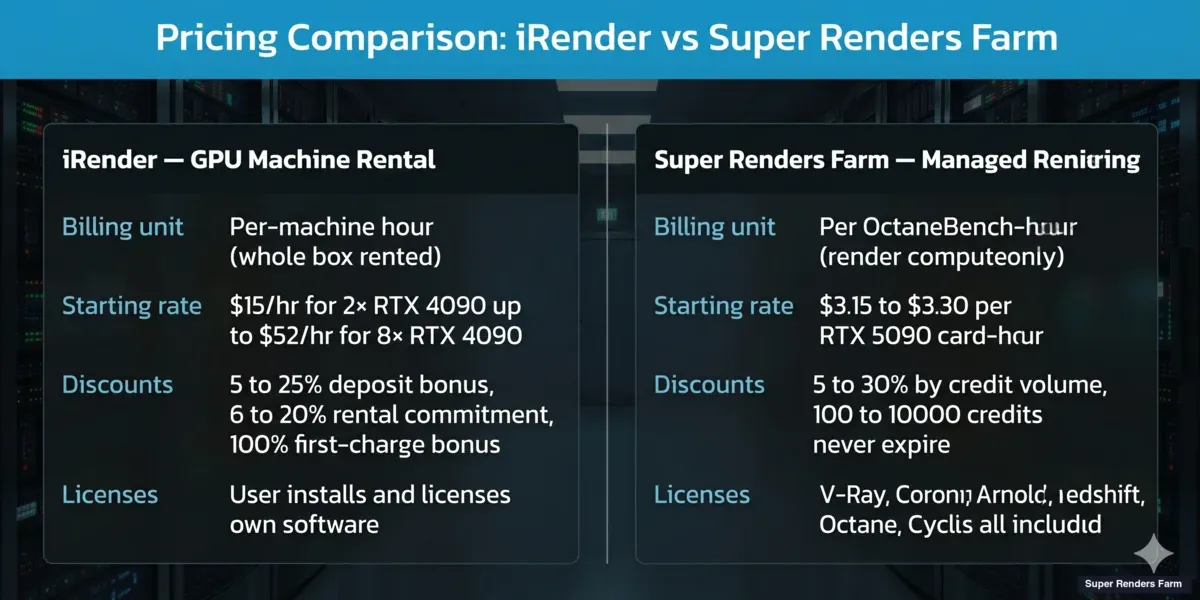 iRender GPU 머신 가격은 2026년 4월 기준으로 2× RTX 4090 $15/시간에서 8× RTX 4090 $52/시간까지였으며(2026년 9월 가격표는 1× RTX 4090 $8.2/시간부터 시작해 RTX 5090 등급이 추가되어 최대 $62/시간까지), Super Renders Farm의 RTX 5090 플릿 OctaneBench-시간당 청구 방식과 비교하면 100 크레딧에서 5%부터 10,000 크레딧에서 30%까지 볼륨 크레딧이 포함됩니다
어느 모델이 더 저렴할까요?
어느 쪽이 더 저렴할까요? 솔직히 말하면, 임대 시간 중 실제 렌더링에 사용되는 비율에 크게 달려 있습니다.
단일 프레임 Redshift 테스트를 생각해 봅니다. iRender 5S (4× RTX 4090, $30/시간)에서 RDP를 열고, Cinema 4D를 실행하고, 머티리얼을 조정하고, 씬을 다시 저장하고, 렌더를 시작하는 사용자는 렌더 자체가 아닌 전체 세션에 비용을 내게 됩니다. 총 청구 시간은 씬이 얼마나 준비되었느냐에 따라 다릅니다: 재사용 가능한 머신 이미지를 가진 경험 많은 사용자는 몇 분 안에 렌더를 시작할 수 있지만, 플러그인 재설치나 씬 조정이 필요한 새 세션은 더 오래 걸립니다. Super Renders Farm에서는 동일한 테스트가 웹 대시보드를 통해 제출되고, 오퍼레이터가 씬을 검증하며, 청구는 렌더가 실제로 실행되는 시간만 계산됩니다 — 보통 동급 GPU의 순수 렌더링 시간의 몇 배 정도입니다.
배치 애니메이션 작업의 경우, 격차가 좁아집니다. iRender에서 500프레임 Redshift 애니메이션을 제출하고 그냥 두는 사용자는 임대 시간의 거의 100%를 렌더링에 사용하게 되어, 머신 단위 요금이 경쟁력을 갖춥니다. 히어로 프레임 건축 시각화(archviz) 또는 룩데브 반복 작업처럼 렌더 사이에 적극적으로 조정하는 경우에는, 설정 및 반복 작업의 부담이 청구되지 않는 매니지드 모델이 보통 훨씬 저렴합니다.
구체적인 100프레임 예시 (2026년 4월 기준)
구체적인 100프레임 예시 (2026년 4월 기준). 전형적인 1080p Redshift archviz 애니메이션을 생각해 봅니다: 깔끔한 지오메트리, GI 캐시 완료, 표준 샘플 품질. 단일 RTX 5090에서 프레임당 렌더 시간은 보통 8~12분 범위에 들어옵니다(머티리얼, AOV, 해상도 설정에 따라 달라집니다). 100프레임 기준으로, Super Renders Farm의 매니지드 플릿에서 실제 렌더 컴퓨팅은 약 13~20 GPU-시간 — 볼륨 할인 전 RTX 5090 카드-시간당 $5.2 기준 약 $69~$104가 됩니다. 동일한 애니메이션을 iRender 5S 티어(4× RTX 4090, $30/시간)에서 진행하면 4프레임씩 병렬 처리가 되며, 저희가 사용하는 것과 동일한 카드 세대인 5i 티어(4× RTX 5090, $38/시간)도 마찬가지입니다. 순수 렌더 소요 시간은 카드당 처리량과 카드 수에 따라 비슷하거나 더 짧을 수 있지만, 청구 시간에는 세션 설정 부담 — RDP 로그인, 씬 전송, 플러그인 확인, 그리고 씬 내 수정 — 이 포함되며, 새 머신에서는 렌더 자체에 30~90분의 추가 과금 시간이 더해질 수 있습니다. 두 총액은 표면 가격이 시사하는 것보다 훨씬 가깝습니다. 구조적 차이는 설정 부담 시간이 미터에 올라가느냐 아니냐의 문제이지, 어느 GPU 요금이 "낮은지"의 문제가 아닙니다. 위의 수치는 카테고리 수준 추정값이며, 씬 복잡도, 샘플 수, AOV 스택에 따라 크게 달라집니다 — 헤비 디스플레이스먼트나 볼류메트릭이 있는 4K 히어로 프레임 archviz는 두 총액을 몇 배로 끌어올릴 수 있습니다.
프로젝트 유형별 프레임당 비용 분석은 저희의 프레임당 비용 가이드와 iRender, Fox, GarageFarm, RebusFarm, Ranch를 포함한 주요 렌더팜을 정규화한 2026년 프레임당 비용 세부 분석을 참고합니다.
숨겨진 비용 체크리스트
숨겨진 비용 체크리스트 — 예산 책정 전에 어느 렌더팜이든 꼭 확인합니다:
| 비용 요소 | iRender | Super Renders Farm |
|---|---|---|
| 소프트웨어 라이센스 (V-Ray, Redshift, Octane 등) | 사용자가 자체 라이센스 사용 또는 무료 티어 활용; Cinema 4D와 Redshift는 사전 설치되어 있으며 Prime 등급 계정은 라이선스 사전 활성화 | 렌더 요금에 포함 |
| 기본값 이상의 RAM 업그레이드 | 해당 없음 — 모든 티어에 256GB 표준 제공 | 노드당 256GB까지 포함 |
| 스토리지 이그레스 / 다운로드 | 포함 | 포함 |
| 렌더 전 설정 시간 | 청구됨 (머신이 임대 중) | 미청구 (렌더 시간만 계산) |
| 씬 로드 중 머신 유휴 시간 | 청구됨 | 해당 없음 |
| 우선순위 / 긴급 추가 요금 | 해당 없음 (사용자가 일정 제어) | GPU는 해당 없음(단일 요금); CPU 우선순위 티어는 Standard 1×, Fast 2×, Fastest 4× |
실용적 결론: iRender는 임대 머신을 활성 렌더링으로 꽉 채울 수 있고 자체 소프트웨어 라이센스를 보유한 경우에 더 저렴한 경향이 있습니다. Super Renders Farm은 IaaS 클럭에서 청구되는 씬 설정, 플러그인 문제 해결, 반복 작업의 노력이 포함된 워크플로우에서 더 저렴한 경향이 있습니다.
GPU 하드웨어: 두 렌더팜 모두의 RTX 4090과 RTX 5090
GPU 하드웨어는 2026년 들어 두 렌더팜이 가장 많이 수렴한 영역입니다 — 두 곳 모두 청구 등급에 정확한 카드 모델을 공개하며, 이제 둘 다 RTX 5090을 제공합니다.
iRender의 RTX 4090 및 RTX 5090 등급
iRender의 현재 가격표는 두 세대를 나란히 운영합니다: 카드당 24GB VRAM의 NVIDIA RTX 4090과 카드당 32GB GDDR7의 NVIDIA RTX 5090이며, 각각 머신당 1/2/4/8장으로 제공됩니다. iRender는 자사 팜을 AMD Threadripper PRO 호스트와 256GB RAM에 장착된 1,000장 이상의 RTX 4090 및 RTX 5090 카드로 설명합니다. 머신당 카드 수는 Redshift나 Octane 같은 멀티 GPU 렌더에 하드웨어를 맞추는 주요 레버이며, 9i 티어는 한 머신에 32GB RTX 5090 카드 8장을 탑재합니다. IaaS 멀티 GPU로서 iRender의 포지셔닝은 한 사용자가 단일 임대 박스에서 4~8장의 카드를 동시에 활용하려는 워크플로우에 실질적으로 유용합니다. 싱글 GPU 워크플로우라면 동일한 사용자가 3S 또는 3i 싱글 카드 티어를 임대할 수 있습니다.
Super Renders Farm의 RTX 5090 플릿
Super Renders Farm은 카드당 32GB VRAM의 NVIDIA RTX 5090 GPU 플릿으로 운영됩니다. 5090의 32GB 여유 메모리는 8K 텍스처의 건축 시각화, 무거운 볼류메트릭의 VFX 씬, 그리고 24GB VRAM 한도로 인해 out-of-core 폴백이 강제되어 온 모든 프로덕션에서 의미 있습니다. 렌더팜이 매니지드 방식이고 단일 테넌트가 아니기 때문에, 사용자는 고정된 수의 카드를 임대하지 않습니다 — 작업은 씬의 실제 GPU 요구에 따라 플릿 전체에 스케줄링됩니다.
카드당 벤치마크 기준 (OctaneBench 2025.2.1)
카드당 벤치마크 기준 (OctaneBench 2025.2.1). OctaneBench 2025.2.1에서 RTX 5090은 1,731 OB를 기록하며, 이는 저희 비용 계산기가 공개 요율 OctaneBench-시간당 $0.003을 카드-시간당 약 $5.2로 환산할 때 쓰는 점수입니다. 여기서는 RTX 4090 점수를 공개하지 않으므로, 카드 간 격차는 직접 사용하는 씬에서 판단하는 것이 가장 정확합니다. 격차는 5090의 GDDR7 메모리 서브시스템이 작동하는 대역폭 집약적·텍스처 헤비 씬에서 가장 두드러지고, 컴퓨팅 집약적 씬에서는 덜한 경향이 있습니다. 멀티 GPU 비교에서 iRender의 8× RTX 4090(9S 티어)는 선형 스케일 렌더러(Redshift 등)에서 더 적은 수의 5090 카드보다 앞설 수 있지만, 24GB VRAM 한도에 부딪히는 프레임당 VRAM 집약적 씬에서는 뒤처집니다; iRender의 8× RTX 5090(9i 티어)는 한 머신에 32GB 카드 8장을 탑재해 이 트레이드오프를 없애며, 요금은 $62/시간입니다. 카드당 OctaneBench 점수는 드라이버 릴리즈마다 ±3~5% 변동하니, 고정된 처리량 보장이 아닌 카테고리 수준 참고값으로 봅니다.
카드 수 vs 카드 VRAM: 무엇이 더 중요할까요?
카드 수와 카드 VRAM 중 무엇이 더 중요할까요? 파이프라인에 따라 다릅니다. 씬이 20GB 이내에 편안하게 맞는 Redshift 아티스트는 더 적은 RTX 5090보다 8× RTX 4090(iRender 9S)에서 더 나은 실제 렌더링 성능을 볼 것입니다. Redshift는 GPU 수에 거의 선형으로 스케일되기 때문입니다. 무거운 텍스처가 있는 4K archviz 인테리어를 렌더링하는 V-Ray GPU 또는 Octane 사용자는 RTX 4090의 24GB VRAM 한도에 부딪혀 씬이 실패하거나 더 느린 CPU 경로로 폴백될 수 있습니다 — 이 경우 RTX 5090의 32GB는 의미 있는 안전 마진입니다. 이 카드가 iRender의 3i~9i 티어에서 머신 단위로 임대되든 Super Renders Farm에서 작업별로 스케줄링되든 마찬가지입니다. 대략적인 규칙: 카드 수는 애니메이션 처리량에, VRAM은 단일 프레임 히어로 샷에 더 중요합니다.
두 렌더팜 모두 주류 GPU 렌더러를 지원합니다: Redshift, Octane, V-Ray GPU, Blender Cycles (CUDA/OptiX), Arnold GPU, 그리고 NVIDIA Iray 같은 신규 엔트리도 있습니다. CPU 우선과 GPU 우선 워크플로우가 혼합된 하이브리드 파이프라인의 경우, Super Renders Farm의 별도 CPU 플릿(20,000개 이상 Xeon 코어)이 작업의 CPU 부분을 처리합니다. iRender에서 CPU 집약적 씬을 렌더링하는 사용자는 보통 임대 GPU 머신의 Threadripper에서 처리하게 되는데, 이는 프로덕션 규모 CPU 애니메이션에 항상 최적화된 방법은 아닙니다.
워크플로우: 셀프서비스 RDP vs 풀 매니지드
이것이 두 서비스 간의 가장 큰 운영상 차이점입니다 — 그리고 보통 어느 것이 주어진 팀에 맞는지를 결정하는 요소입니다.
iRender: RDP를 통한 셀프서비스 IaaS
iRender의 모델은 RDP(원격 데스크톱 프로토콜)를 통한 셀프서비스 IaaS입니다. 크레딧을 충전한 후, 사용자는 iRender 웹 포털에서 머신을 시작하고, 로그인 자격증명이 포함된 RDP 파일을 받아, 원격 Windows 또는 Ubuntu 데스크톱을 엽니다. 거기서부터는 사실상 빈 원격 워크스테이션입니다: 3ds Max, Blender, Cinema 4D, Houdini, 또는 프로젝트에서 사용하는 DCC를 설치하고, 렌더링 엔진과 플러그인을 설치하고, 씬을 포털의 파일 전송 도구(머신이 꺼져 있어도 사용 가능)를 통해 복사하고, 출력 경로를 설정하고, 렌더를 실행합니다. 작업 세션은 재사용 가능한 "이미지"로 저장할 수 있어서 매번 소프트웨어를 설치할 필요가 없으며, Cinema 4D와 Redshift는 iRender 머신에 사전 설치되어 있어(Prime 등급 계정은 라이선스 사전 활성화, 그 외에는 자체 라이선스 지참) 해당 사용자는 설치 단계를 건너뜁니다.
RDP 모델에는 실제 장점이 있습니다. 사용자가 소프트웨어 버전, 플러그인 빌드, GPU 드라이버 버전, 환경 변수를 완전히 제어할 수 있습니다. 틈새 Blender 애드온, 실험적 Houdini 빌드, Unreal Engine의 Movie Render Queue, Lumion이나 D5 Render 같은 실시간 도구 등 매우 특정한 툴체인에 의존하는 파이프라인은 사용자가 박스를 직접 설정할 수 있을 때 더 잘 작동하는 경우가 많습니다. Lumion, Enscape, Twinmotion, KeyShot, Omniverse를 포함한 더 넓은 범위의 DCC에 대한 iRender의 지원은 IaaS 모델의 직접적인 결과입니다: 사용자가 설치할 수 있다면, 서비스는 실행할 수 있습니다.
트레이드오프는 사용자가 렌더링 환경을 소유한다는 것입니다, 실패 모드도 포함하기 때문입니다. 누락된 텍스처, 플러그인 버전 불일치, 잘못된 서비스 팩, 잘못된 라이센스 활성화, 네트워크 경로 문제 — 이 모든 게 사용자가 디버그해야 할 문제이고, 그 내내 클럭은 돌아가고 있습니다.
Super Renders Farm: 풀 매니지드 씬 제출
Super Renders Farm의 모델은 풀 매니지드입니다. 사용자가 Render Dashboard에 씬을 업로드하면, 저희 오퍼레이터가 씬 파일을 대상 DCC와 렌더링 엔진에 대해 검증하고, 누락된 에셋을 확인하고, 플러그인 버전을 검증하고, 적절한 하드웨어에서 렌더를 설정하고, 진행 상황을 모니터링하고, 시간을 낭비하기 전에 문제를 파악합니다. 사용자는 머신에 원격 접속하지 않고, 렌더 라이센스를 설치하지 않으며, 제출 파라미터를 수동으로 조정하지 않습니다. 작업이 완료되면 출력 폴더에 프레임이 나타납니다. 저희는 풀 매니지드 렌더팜이란 무엇인가 설명 글에서 이 모델을 더 자세히 다루고 있습니다.
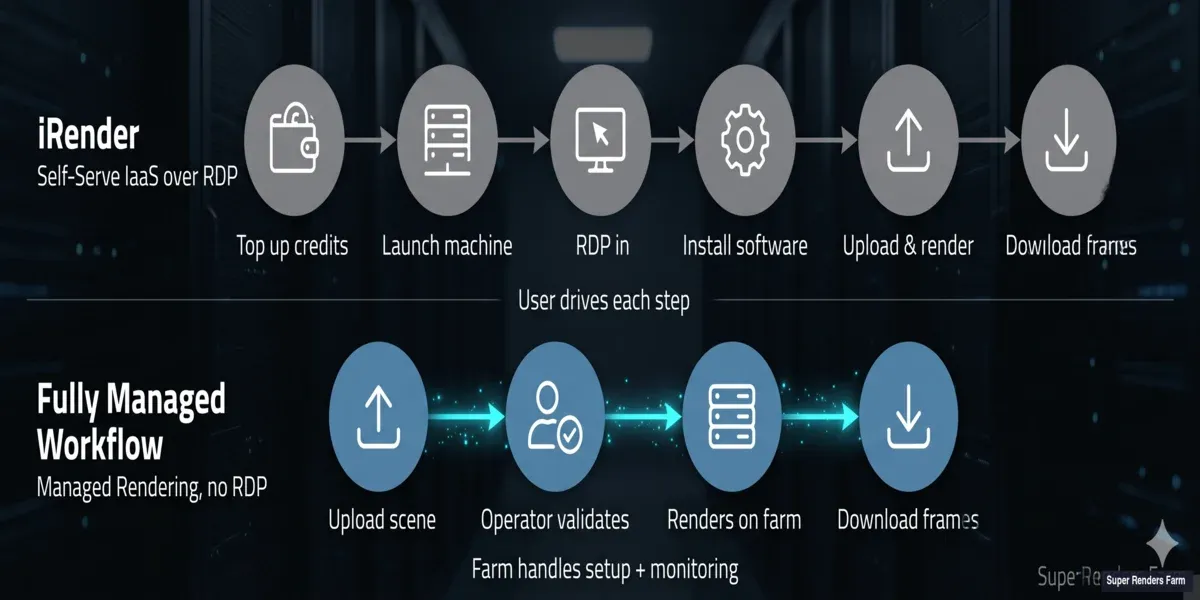 클라우드 렌더링 워크플로우 비교 — iRender 셀프 주도 RDP 6단계(충전, 머신 시작, RDP 접속, 소프트웨어 설치, 업로드 및 렌더, 프레임 다운로드) vs Super Renders Farm 풀 매니지드 4단계(업로드, 오퍼레이터 검증, 렌더팜에서 렌더링, 프레임 다운로드)
매니지드 모델은 archviz 및 모션 디자인 파이프라인에서 흔히 보이는 실패 유형 — 누락된 Forest Pack 텍스처, 잘못된 V-Ray 버전 불일치, 대상 워커보다 더 새로운 Max 서비스 팩으로 빌드된 씬, 렌더 요소 이름 충돌 — 을 통째로 없애줍니다. "제어감"이 느리게 느껴질 수 있지만, 오퍼레이터 주도 워크플로우가 머신-시간당 요금 대신 초 단위 렌더 시간 요금을 제시할 수 있는 이유입니다.
어느 모델도 보편적으로 더 낫지 않습니다
어느 모델도 보편적으로 더 나은 건 아닙니다. 정답은 팀에 따라 다릅니다:
- 셀프서비스 RDP(iRender) 선택 — 파이프라인이 특정 소프트웨어 버전이나 덜 일반적인 DCC에 의존하고, 렌더링 환경에 대한 완전한 제어를 원하고, 팀에 제출 문제를 디버그할 엔지니어링 역량이 있거나, 설정 부담이 렌더링 시간에 비해 작은 배치 애니메이션을 위해 멀티 GPU 머신을 임대하는 경우.
- 풀 매니지드(Super Renders Farm) 선택 — 씬을 제출하고 그냥 두고 싶고, 팀이 렌더 측 인프라를 유지관리하고 싶지 않으며, 파이프라인이 저희가 기본으로 지원하는 주류 DCC와 엔진으로 구성되어 있거나, 유휴 시간 청구가 빠르게 누적되는 상당한 씬 반복 작업이 포함된 워크플로우인 경우.
지원 DCC 및 렌더링 엔진
iRender가 IaaS이기 때문에, 지원 소프트웨어 목록은 "임대 머신에 사용자가 일반적으로 설치하는 소프트웨어" — 사실상 Windows나 Ubuntu 설치 파일이 있는 모든 것 — 로 더 정확하게 설명할 수 있습니다. 공개된 목록에는 3ds Max, Maya, Cinema 4D, Blender, Houdini, Unreal Engine 4/5, Lumion, Enscape, D5 Render, Twinmotion, KeyShot, Omniverse, Rhinoceros, Modo, SketchUp, Daz Studio가 포함됩니다. 렌더링 엔진으로는 Redshift, Octane, V-Ray GPU, Arnold GPU, Maxwell, NVIDIA Iray, Blender Cycles, Corona, FStorm, LuxCore, RenderMan, Indigo가 있습니다.
Super Renders Farm은 3ds Max, Maya, Cinema 4D, Blender, Houdini, After Effects, NukeX를 기본으로 지원하고, 렌더링 엔진은 V-Ray, Corona, Arnold, Redshift, Octane, Cycles입니다. 저희가 설치와 라이센싱을 내부적으로 처리하기 때문에, 공개된 DCC 목록은 iRender보다 좁습니다 — 이론적으로 설치 가능한 슈퍼셋이 아니라 렌더팜에서 실제로 유지관리하는 것들을 반영합니다.
파이프라인별 실용적 지침
실용적 지침:
- 파이프라인이 Lumion, D5, Twinmotion, Enscape, KeyShot, 또는 Unreal (Movie Render Queue)이라면 — iRender의 셀프서비스 모델이 더 잘 맞습니다. 저희는 현재 이것들을 매니지드 워크플로우로 지원하지 않습니다.
- 파이프라인이 3ds Max + V-Ray, Maya + Arnold, Cinema 4D + Redshift, Blender + Cycles, 또는 Houdini + Mantra라면 — 두 서비스 모두 가능하고, 선택은 워크플로우 선호도와 가격 계산에 달려 있습니다.
- 파이프라인이 무거운 CPU 애니메이션 렌더링(V-Ray CPU, Corona, Arnold CPU)을 혼합한다면 — Super Renders Farm의 20,000개 이상 CPU 코어가 iRender의 Threadripper 장착 GPU 머신에서 렌더링하는 것보다 더 잘 맞습니다.
신뢰 신호 및 인증
소프트웨어 파트너 인증
두 렌더팜 모두 Maxon 파트너입니다. Super Renders Farm은 Chaos 파트너 페이지에서 공인된 V-Ray 렌더 파트너로 등록되어 있고, Maxon 파트너(Cinema 4D / Redshift / Red Giant)이며, Anima archviz 워크플로우를 위한 AXYZ design과의 과거 파트너십을 보유하고 있습니다. iRender는 2023년 7월 공식 Maxon 렌더팜 파트너십을 발표했으며 지금도 Maxon 파트너를 자처하고 있습니다. iRender 머신에는 Cinema 4D와 Redshift가 사전 설치되어 있고, Prime 등급 계정은 인스턴스에서 공식 라이선스를 사전 활성화 받습니다(다른 계정은 자체 Maxon 라이선스를 지참하거나 스튜디오 플로팅 라이선스를 사용). Chaos 쪽에서는 iRender의 V-Ray 지원이 렌더 파트너 등록이 아니라 임대 머신에서 사용자 본인의 라이선스를 통해 이루어집니다. iRender는 또한 서드파티 업계 인정을 보유하고 있습니다 — Gold Stevie International Business Award(2021), SME100 Asia Awards(2021, 2024), 2021년 베트남 Top 10 기업상, 2021년 사오 쿠에 어워드 — 그리고 3dmodels.org의 Renovation Archviz Challenge 같은 커뮤니티 이니셔티브를 후원합니다. 신호 유형을 프로덕션에서 중요한 것과 매칭하세요 — 한쪽은 소프트웨어 버전 인증과 라이센스 커버리지, 다른 한쪽은 독립적으로 심사된 비즈니스 어워드입니다.
컴플라이언스 인증
규정 준수 요구사항이 있는 프로젝트(ISO 27001, TPN 인증, 스튜디오 지정 보안 프레임워크)의 경우, 두 렌더팜은 서로 다른 내용을 공개합니다. iRender는 자사 가격 및 서비스 페이지에서 서버가 정보보안을 위한 ISO 27001(BS7799), IT 서비스 관리를 위한 ISO 20000(ITIL), 품질 관리를 위한 ISO 9001:2000 인증을 보유한 Uptime Tier III 인증 데이터센터에 위치한다고 명시합니다. FAQ 페이지에는 24/7 CCTV 모니터링과 생체 인증 출입 통제가 추가로 언급되고, Cinema 4D 페이지에는 시설 가동률 99.982%가 제시됩니다. 이는 벤더가 자사 상업용 페이지에서 명시한 시설 수준 인증이며, 이용약관이나 법적 페이지에는 반복되지 않고, 인증 기관이나 인증서 번호도 공개되어 있지 않습니다. 계약서에 ISO 27001이 구체적으로 명시되어 있다면, 두 렌더팜 중 iRender가 해당 표준을 공개하는 쪽이므로, 인증서를 요청하고 어느 법인이 이를 보유하는지 확인하는 것이 합리적인 다음 단계입니다. Super Renders Farm은 ISO 27001, SOC 2, TPN 인증을 보유하거나 주장하지 않습니다. 저희는 전송 중 및 저장 시 암호화(스토리지에 서버 측 AES-256)를 제공하며, NDA 기반으로 맞춤형 보안 검토를 지원합니다. 두 렌더팜 모두 상업 및 archviz 프로젝트의 NDA 작업을 일상적으로 처리합니다. 다만 사전 릴리즈 영화 VFX 프로덕션이 요구하는 스튜디오 수준의 TPN 평가는 어느 쪽도 현재 공개하지 않습니다.
지역 인프라
지역적 맥락도 중요합니다. 두 회사 모두 베트남에서 운영됩니다(iRender는 하노이, Super Renders Farm은 베트남 엔지니어링 뿌리를 가진 미국 법인). 두 곳 모두 글로벌 고객 기반을 가지고 있지만, iRender의 인프라는 아시아-태평양에 집중(하노이 + 싱가포르 데이터 센터)되어 있고, Super Renders Farm의 고객은 아메리카 + 유럽에 편중됩니다. 워크스테이션 위치에 따라 업로드 속도와 지연 시간이 크게 달라질 수 있습니다. iRender는 자사 데이터센터가 태양광 에너지로 운영된다고 추가로 명시하고 있는데, 구매 체크리스트에 지속가능성 항목이 있다면 참고할 만합니다.
iRender가 맞는 경우
- 파이프라인이 직접 설치 제어가 필요한 소프트웨어에 의존하는 경우 — Lumion, D5 Render, Enscape, Twinmotion, KeyShot, Unreal Engine Movie Render Queue, 또는 틈새 Blender/Houdini 빌드.
- GPU 드라이버 버전, 플러그인 빌드, 환경 변수 등 렌더링 환경에 대한 RDP 수준 제어를 원하는 경우.
- 설정 부담이 총 렌더링 시간에 비해 작아서 머신-시간당 청구 모델이 비용 효율적인 배치 애니메이션 렌더링 워크플로우인 경우.
- 단일 임대 박스에서 4~8장의 RTX 4090 또는 RTX 5090 카드를 포화시키고 싶은 멀티 GPU Redshift, Octane, 또는 V-Ray GPU 작업을 실행하는 경우 — 9i 티어에서는 RTX 5090 최대 8장까지 가능합니다.
- 구매 체크리스트에 인증된 시설이 요구되는 경우: iRender는 ISO 27001, ISO 20000, ISO 9001:2000 인증을 갖춘 Uptime Tier III 데이터센터를 명시합니다.
- 2023년 공식 Maxon 파트너십을 발표한 렌더팜의 임대 노드에 소프트웨어가 사전 설치되어 있기를 원하는 Cinema 4D + Redshift 사용자인 경우(Prime 등급 계정은 라이선스 사전 활성화).
- 동남아시아에 기반하고 하노이 또는 싱가포르의 iRender 인프라와 지리적 근접성을 원하는 경우.
- 이미 소프트웨어 라이센스를 보유하고 있어서 내장 라이센스 비용 없이 클라우드로 가져오고 싶은 경우.
- 팀에 원격 머신에서 제출 문제, 누락된 에셋, 라이센스 활성화를 디버그할 엔지니어링 역량이 있는 경우.
Super Renders Farm이 맞는 경우
- 씬을 제출하고 그냥 두고 싶은 경우 — RDP 없이, 라이센스 설정 없이, 플러그인 문제 해결 없이 풀 매니지드 워크플로우.
- GPU 씬이 정기적으로 24GB VRAM을 초과해서, 머신 전체를 임대·관리하지 않고도 작업별로 스케줄링되는 RTX 5090의 32GB 여유 공간이 필요한 경우.
- 프로젝트가 CPU 집약적(애니메이션용 V-Ray CPU, Corona, Arnold CPU)이고 전용 20,000개 이상 코어 CPU 플릿의 이점을 활용하고 싶은 경우.
- IaaS 클럭에서의 유휴 시간 청구가 빠르게 누적되는 상당한 씬 반복 작업이 포함된 워크플로우인 경우.
- Cinema 4D + Redshift 파이프라인을 운영하고 Chaos V-Ray 인증 옆에서 명시적인 Maxon 파트너 지원을 원하는 경우.
- 렌더가 실행된 후 디버그하는 대신, 오퍼레이터가 씬을 능동적으로 검증하고 누락된 텍스처를 미리 파악해주길 원하는 경우.
- 아메리카 또는 유럽에 기반하고 계약, 결제, 지원을 미국 관할에서 처리하는 미국 등록 벤더를 원하는 경우.
아키비즈 스튜디오를 위한 iRender 대안
건축 시각화(archviz) 작업을 위해 iRender를 다른 옵션과 비교하고 있다면, iRender만이 이 카테고리의 유일한 정평 있는 이름은 아닙니다. 여러 렌더팜이 V-Ray 및 Corona 아키비즈 파이프라인을 지원하며, 각각 iRender의 셀프서비스 RDP 모델과는 다른 트레이드오프를 갖고 있습니다:
- GarageFarm — 영국 등록(Companies House, 2010년 설립) 풀 매니지드 렌더팜으로, 자매회사 Copernicus Computing을 통해 운영되는 폴란드 ISO 27001 데이터센터를 갖추고 있습니다. 폭넓은 DCC 및 렌더링 엔진을 지원합니다. 저희의 GarageFarm vs Super Renders Farm 비교를 참고합니다.
- RebusFarm — 독일 노르트라인베스트팔렌주 레버쿠젠에 본사를 둔 GmbH로, 이 카테고리에서 오래된 이름 중 하나이며, 자체 RenderPoints 화폐로 청구합니다. V-Ray/Corona에 강점이 있지만 네이티브 Houdini 또는 Karma 지원은 없습니다. 저희의 RebusFarm 대안 세부 분석을 참고합니다.
- Ranch Computing — 프랑스 SAS(파리, 2006년 설립)로, 단일 자체 데이터센터를 운영하며 EUR 전용 종량제 가격을 제공하고, 청구 등급에서 GPU SKU(RTX 3090 / 4090 / 5090)를 공개하는 이 카테고리의 몇 안 되는 렌더팜 중 하나입니다. 저희의 Ranch Computing vs Super Renders Farm 비교를 참고합니다.
- Fox Renderfarm — 애니메이션, VFX, 아키비즈 작업 전반에 폭넓은 DCC 목록을 갖춘 중국 기반 렌더팜입니다. 저희의 Fox Renderfarm vs Super Renders Farm 비교를 참고합니다.
- Super Renders Farm — 위 렌더팜들 중 하나의 선택지일 뿐, 기본 선택지는 아닙니다. 아키비즈 특화 관점에서 보면: V-Ray와 Corona 라이센스가 렌더 요금에 포함되어 있고, 저희는 공인된 Chaos 렌더 파트너이자 Maxon 파트너이며, 풀 매니지드 워크플로우에서는 오퍼레이터가 작업 실행 전에 씬과 플러그인 버전을 검증하므로 이를 임대 RDP 세션에 맡기지 않습니다. 이는 렌더링 환경을 직접 소유하고 싶지 않은 스튜디오에 적합하며, 플러그인 빌드에 대한 RDP 수준 제어가 특별히 필요한 스튜디오에는 상대적으로 덜 맞습니다 — 위의 "iRender가 맞는 경우"를 참고합니다.
이 중 어느 것도 보편적인 정답은 아닙니다. GarageFarm, RebusFarm, Ranch Computing은 iRender 및 Super Renders Farm과 동일한 범용 아키비즈 영역에서 경쟁하며, 어느 쪽이 맞는지는 지역(EU 기반 가격 및 데이터센터 vs. 미국 등록·베트남 뿌리를 가진 운영), 스튜디오가 표준으로 삼는 정확한 렌더링 엔진 조합, 그리고 팀이 매니지드 워크플로우를 원하는지 아니면 직접 구성하는 임대 머신을 원하는지에 따라 달라집니다.
FAQ
Q: Super Renders Farm과 iRender는 어떻게 다른가요? A: Super Renders Farm은 렌더 시간 기준 초 단위로 청구되는 풀 매니지드 클라우드 렌더팜으로, 웹 대시보드로 씬을 제출하며 원격 데스크톱 세션은 필요하지 않습니다. iRender는 GPU 머신 전체를 시간 단위로 임대해 RDP로 직접 운영하는 방식입니다. 머신을 직접 관리하고 싶지 않은 팀에는 Super Renders Farm이, 렌더링 환경을 직접 제어하고 싶은 팀에는 iRender가 맞습니다. 위 섹션에서 가격, 하드웨어, 워크플로우를 자세히 비교합니다.
Q: iRender와 Super Renders Farm 중 어느 쪽이 가격이 더 좋은가요? A: 어느 쪽도 보편적으로 더 저렴하지 않습니다. iRender의 머신-시간당 요금(RTX 4090 등급 $8.2~$52/시간, RTX 5090 등급 $10.8~$62/시간, 카드 수에 따라)은 임대 머신이 거의 100% 가동률로 실행되는 긴 배치 애니메이션에서 Super Renders Farm의 초 단위 렌더 시간 요금보다 저렴하게 나올 수 있습니다. Super Renders Farm은 상당한 씬 설정, 반복, 플러그인 문제 해결 시간이 있는 워크플로우에서 보통 더 저렴합니다. 그 유휴 시간이 청구되지 않기 때문입니다. 착수하기 전에 각 렌더팜의 Cost Calculator로 실제 씬 데이터를 사용해서 확인합니다. Q: 렌더팜을 사용하기 위해 RDP 접속이 필요한가요? A: 아닙니다 — 그 이유를 이해하는 게 중요합니다. iRender의 모델은 GPU 머신 전체를 임대하고 렌더 세션을 직접 진행하기 때문에 RDP가 필요합니다. Super Renders Farm의 풀 매니지드 모델은 RDP를 전혀 사용하지 않습니다. 씬은 웹 대시보드를 통해 제출되고 오퍼레이터가 머신 측을 처리합니다. 렌더링 환경에 대한 원격 데스크톱 제어가 파이프라인에 꼭 필요하다면 iRender(또는 다른 IaaS 제공업체)가 맞는 카테고리입니다. 머신을 전혀 관리하고 싶지 않다면 매니지드 렌더팜이 더 잘 맞습니다. Q: 어느 렌더팜이 베트남에 기반하고 있나요? A: 둘 다 베트남 엔지니어링 뿌리를 갖고 있습니다. iRender는 하노이에 본사를 두고 싱가포르에 데이터 센터가 있습니다. Super Renders Farm은 2017년 설립된 미국(캘리포니아 주 산타아나) 법인으로 등록되어 있지만, 팀은 2010년부터 운영해 왔고 베트남 엔지니어링 스태프가 포함됩니다. iRender는 인프라 위치를 공개하고 있고(하노이, 싱가포르 데이터 센터), Super Renders Farm은 데이터센터 위치를 공개하지 않습니다. 아메리카/유럽 고객 기반에는 Super Renders Farm이 보통 더 잘 맞습니다. Q: iRender가 Cinema 4D와 Redshift를 지원하나요? A: 네, 그리고 iRender는 2023년 7월 공식 Maxon 렌더팜 파트너십을 발표했으며 지금도 Maxon 파트너를 자처하고 있습니다. iRender 머신에는 1~8장의 RTX 4090 또는 RTX 5090 카드에 Cinema 4D와 Redshift가 사전 설치되어 있으며, Prime 등급 계정은 인스턴스에서 공식 라이선스를 사전 활성화 받고, 다른 계정은 자체 Maxon 라이선스를 지참합니다. Super Renders Farm은 Cinema 4D / Redshift / Red Giant 공인 인증을 가진 Maxon 파트너이며, Redshift는 라이센스가 렌더 요금에 포함된 RTX 5090 GPU 플릿에서 실행됩니다. 기능 지원 자체는 비슷합니다. 차이는 사용자가 직접 처리하느냐 렌더팜이 설치와 라이센싱을 처리하느냐입니다. Q: 각 렌더팜은 어떤 GPU를 사용하나요? A: iRender는 NVIDIA RTX 4090 카드(24GB VRAM)와 NVIDIA RTX 5090 카드(32GB GDDR7)를 모두 제공하며, 두 세대 모두 1, 2, 4, 8장 카드 구성의 머신에 장착됩니다. Super Renders Farm은 카드당 32GB VRAM의 NVIDIA RTX 5090을 사용하며, 머신 단위 임대가 아니라 작업별로 스케줄링됩니다. 두 세대 간 VRAM 차이는 24GB를 초과하는 씬(무거운 텍스처의 4K archviz, 밀도 높은 스캐터 씬, 볼류메트릭 효과가 있는 VFX에서 흔히 발생)에서는 중요하고, iRender의 멀티 GPU 카드 수는 GPU 수에 선형으로 스케일되는 배치 애니메이션 렌더링의 장점입니다. OctaneBench 용어로 보면 RTX 5090은 OctaneBench 2025.2.1에서 1,731 OB를 기록하며, 이를 통해 공개 요율 OctaneBench-시간당 $0.003이 Super Renders Farm의 RTX 5090 카드-시간당 약 $5.2가 됩니다. Q: iRender는 ISO 27001 인증이나 Tier III 데이터센터를 갖추고 있나요? A: iRender는 자사 서버가 ISO 27001(BS7799), ISO 20000(ITIL), ISO 9001:2000 인증을 보유한 Uptime Tier III 인증 데이터센터에서 호스팅된다고 명시하며, FAQ 페이지에는 시설의 24/7 CCTV 모니터링과 생체 인증 출입 통제가 설명되어 있습니다. 이는 iRender의 가격 및 서비스 페이지에 공개된 데이터센터 인증입니다(이용약관이나 법적 페이지에는 없으며, 인증 기관이나 인증서 번호도 공개되어 있지 않습니다). 계약서에 특정 표준이 요구된다면 iRender에 인증서와 인증 기관을 문의하세요. Super Renders Farm은 ISO 27001, SOC 2, TPN 인증을 주장하지 않습니다. Q: 렌더링 엔진 라이센스가 가격에 포함되어 있나요? A: Super Renders Farm은 렌더 요금에 V-Ray, Corona, Arnold, Redshift, Octane, Cycles 라이센스를 포함합니다 — 엔진별 추가 요금은 없습니다. iRender의 IaaS 모델은 사용자가 자체 라이센스를 가져와야 합니다(또는 가능한 경우 무료 티어 사용). 사용자가 임대 머신에 렌더러를 설치하고 활성화하는 방식이기 때문입니다. 자체 라이센스가 없는 Redshift나 Octane 사용자에게는 이것이 비교에서 고려해야 할 실질적인 비용 차이입니다. Q: Super Renders Farm 머신에 원격 접속이 가능한가요? A: 아닙니다. Super Renders Farm은 의도적으로 RDP 접속이 없는 풀 매니지드 렌더팜입니다 — 저희 오퍼레이터가 사용자를 대신해서 머신 설정, 씬 검증, 렌더 설정을 처리합니다. 파이프라인에 RDP 수준 제어가 꼭 필요하다면 iRender(또는 다른 IaaS 제공업체)가 맞는 카테고리입니다. 매니지드 모델이 초 단위 렌더 시간 청구와 능동적 씬 검증 워크플로우의 원천입니다. RDP를 없앤 것이 두 가지 모두를 가능하게 만드는 트레이드오프입니다. Q: iRender와 Super Renders Farm을 같은 프로젝트에 함께 사용할 수 있나요? A: 네 — 어느 쪽에도 잠금이 없습니다. 일부 스튜디오는 특정 소프트웨어나 멀티 GPU RDP 워크플로우(Lumion, Unreal MRQ, 실험적 플러그인 빌드)가 필요한 렌더 세션에 iRender를, 대부분의 매니지드 CPU 및 GPU 애니메이션 작업에 Super Renders Farm을 사용합니다. 프로젝트를 나눈다면 두 렌더팜에서 렌더링 엔진 버전이 정확히 일치하는지 확인합니다 — 동일한 V-Ray, Corona, Redshift 빌드 번호 — 그렇지 않으면 프레임이 미묘하게 달라져서 하류 합성에서 문제가 생길 수 있습니다.
About Alice Harper
Blender and V-Ray specialist. Passionate about optimizing render workflows, sharing tips, and educating the 3D community to achieve photorealistic results faster.