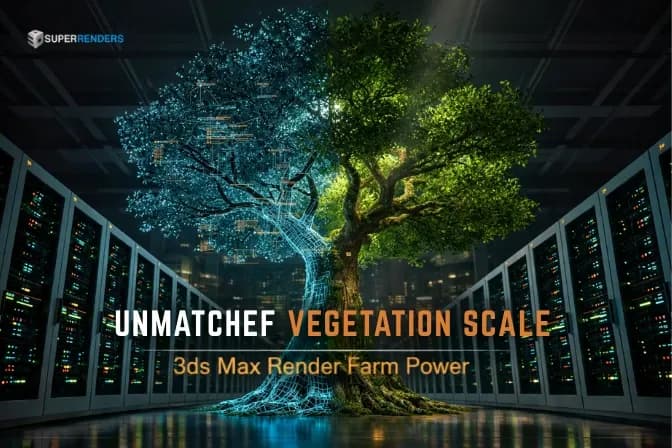
GrowFX Plugin erklärt: Das prozedurale Mindset hinter realistischen Pflanzen in 3ds Max
Überblick
Wenn Sie jemals Vegetation in 3ds Max gebaut haben und gespürt haben, dass etwas nicht ganz stimmt, sind Sie nicht allein.
Vielleicht sahen die Bäume zu sauber aus. Vielleicht wirkten die Äste zufällig statt natürlich. Oder vielleicht sah alles akzeptabel aus—bis die Szene schwer, langsam und schwer zu verwalten wurde, sobald die Realitätstreue weiter erhöht wurde. Dies ist ein häufiger Ausfallpunkt bei der Arbeit mit Vegetation, und es hat normalerweise nichts mit künstlerischem Geschick zu tun.
Das eigentliche Problem ist das Mindset. Die meisten Vegetation-Workflows behandeln Pflanzen als statische Objekte. Echte Pflanzen sind nicht statisch. Sie wachsen, reagieren und passen sich an. Das GrowFX Plugin wurde entwickelt, um diese genaue Lücke zu schließen, bleibt aber eines der am meisten missverstandenen Tools im 3ds Max Ökosystem.
Dieser Artikel ist weder ein Tutorial noch ein Optimierungsleitfaden. Stattdessen erklärt er, was GrowFX wirklich ist, wie es konzeptionell funktioniert, und warum das Verständnis des prozeduralen Mindsets der Schlüssel zum Erstellen glaubwürdiger, produktionsreifer Vegetation in professionellen Archviz- und VFX-Projekten ist.
1. Was ist GrowFX in 3ds Max?
GrowFX ist ein prozedurales Pflanzenmodellierungssystem von Exlevel für Autodesk 3ds Max. Im Kern ist es kein Scatter-Tool und keine Pflanzenbibliothek. GrowFX ist eine parametrische Wachstums-Engine, die Vegetation basierend auf Regeln generiert statt auf fester Geometrie.
Im Gegensatz zu statischen Assets, bei denen das endgültige Mesh bereits eingebacken ist, wertet GrowFX die Pflanzenstruktur in Echtzeit aus. Stämme, Äste und Blätter entstehen aus mathematischen Anweisungen, die definieren, wie eine Pflanze wächst, nicht nur wie sie aussieht. Dies ermöglicht es einem einzelnen GrowFX-Asset, eine ganze Pflanzenart darzustellen statt nur eines eingefrorenen Modells.
GrowFX wird häufig in professionellen Archviz- und VFX-Pipelines verwendet, wo Vegetation in Nahaufnahmen standhalten muss, sich an architektonische Einschränkungen anpasst oder einer bestimmten kreativen Vorgabe folgt, ohne Assets von Grund auf neu zu erstellen.
2. Wie GrowFX funktioniert: Das Kern-Wachstumssystem
Die Grundlage von GrowFX liegt in der Trennung von Wachstumslogik und Oberflächengeometrie. Pflanzen werden zunächst aus einer Skelettstruktur gebaut und erst dann in renderfähige Meshes umgewandelt.
2.1 Spline-basierte Pfadgeneratoren
GrowFX nutzt Splines als Wachstumspfade. Jeder Spline stellt eine Wachstumskategorie dar—wie einen Stamm, Primäräste, Sekundäräste oder Blätter. Diese Pfade sind hierarchisch organisiert, was bedeutet, dass untergeordnete Pfade Ausrichtung, Position und Wachstumsdaten von ihren übergeordneten Elementen erben.
Diese Struktur spiegelt echte Pflanzenbotanik wider. Ein Ast weiß, wo er auf dem Stamm sitzt, und ein Blatt weiß, zu welchem Ast es gehört. Das Ergebnis ist ein kaskadendes Wachstumssystem, in dem komplexe Strukturen aus einfachen Regeln entstehen.
2.2 Modifier-Stack und Pflanzen-Topologie
Anstatt Geometrie zu kollapsen, verlässt sich GrowFX auf einen modifier-basierten Workflow. Jeder Modifier verändert, wie sich Wachstumspfade verhalten—sie krümmen sich, fügen Rauschen hinzu oder ändern ihre Ausrichtung. Da dieses System prozedural ist, bleibt die Topologie während der gesamten Produktion vorhersehbar und editierbar.
Künstler können die Struktur einer Pflanze in jedem Stadium anpassen, ohne die zugrunde liegende Logik zu zerstören, was für langfristige Projekte und späte Änderungen entscheidend ist.
2.3 Verteilungsknoten und strukturelle Hierarchie
Verteilungsknoten bestimmen, wo Wachstum beginnt und wie oft es sich wiederholt. Stämme erzeugen Äste, Äste erzeugen Zweige und Zweige erzeugen Blätter—alles durch Verteilungsregeln gesteuert, nicht durch manuelle Platzierung.
Diese Hierarchie ermöglicht es GrowFX, Pflanzen zu produzieren, die organisiert wirken statt zufällig, selbst wenn große Mengen an Variation eingeführt werden.
3. Parametrische Kontrolle und natürliche Variation
Einer der Hauptgründe, warum GrowFX-Vegetation natürlich aussieht, ist, dass die Variation durch Design in das System eingebaut ist.
3.1 Alter-, Form- und Wachstumsparameter
GrowFX ermöglicht es Pflanzen, mithilfe alterbasierter Parameter im Laufe der Zeit zu verändern. Eine Erhöhung des Alters einer Pflanze kann die Stammdicke, Astlänge und Laubdichte gleichzeitig beeinflussen. Da diese Beziehungen durch Regeln definiert sind, entwickelt sich die Pflanze biologisch plausibel statt gleichmäßig zu skalieren.
3.2 Zufälliger Seed und rauschbasierte Variation
Kontrollierte Zufälligkeit wird durch Zufallsseeds und prozedurales Rauschen gehandhabt. Durch Ändern eines einzelnen Seedwerts können Künstler unzählige einzigartige Variationen generieren, die alle derselben botanischen Logik folgen.
Dies vermeidet das häufige Problem der Wiederholung, das bei Vegetationsbibliotheken zu sehen ist, wo das gleiche Modell immer wieder in einer Szene erscheint.
3.3 Meta Mesh und nicht-destruktive Bearbeitung
GrowFX führt Meta Mesh-Technologie ein, um eines der größten Realitätstreue-Probleme bei 3D-Vegetation zu lösen: sichtbare Nähte bei Astkreuzungen. Meta Mesh verbindet Äste und Stämme zu einer einheitlichen Oberfläche und erstellt sanfte organische Übergänge, die in Nahaufnahmen standhalten.
Da Meta Mesh prozedural ist, können Künstler die Astdicke oder -struktur anpassen, ohne die Topologie manuell zu reparieren.
4. GrowFX vs. Scatter-basierte Vegetation-Tools
GrowFX wird oft mit Tools wie Forest Pack oder Chaos Scatter verglichen, aber sie lösen unterschiedliche Probleme.
4.1 Modellierung vs. Verteilung
GrowFX ist ein Modellierungssystem. Sein Zweck ist es, zu definieren, wie eine Pflanze wächst und sich verhält. Scatter-Tools konzentrieren sich dagegen auf die Verteilung existierender Objekte über eine Oberfläche.
Diese Unterscheidung ist wichtig. GrowFX zeichnet sich bei der Erstellung von Hero-Pflanzen aus—Bäumen oder Vegetation, die nah an der Kamera erscheinen und präzise Kontrolle erfordern.
4.2 Ersetzen von Pflanzenbibliotheken in benutzerdefinierten Projekten
In Projekten, die benutzerdefinierte Arten, standortspezifisches Wachstum oder starke künstlerische Vorgaben erfordern, können Pflanzenbibliotheken einschränkend werden. GrowFX ermöglicht es Studios, wiederverwendbare prozedurale Assets zu erstellen, die endlose Variationen generieren, ohne sich auf vorgefertigte Meshes zu verlassen.
In professionellen Workflows werden GrowFX-Assets oft als Quellen für Scatter-Tools verwendet und kombinieren prozedurale Modellierung mit effizienter Szenenlayoutgestaltung.
5. Stärken und Grenzen von GrowFX
Wie jedes fortschrittliche Tool hat GrowFX klare Vorteile und Kompromisse.
5.1 Wichtige Stärken
- Hohes Maß an künstlerischer und struktureller Kontrolle
- Biologisch konsistentes Wachstumsverhalten
- Vollständig nicht-destruktiver Workflow
- Starke Integration mit architektonischen und Umgebungseinschränkungen
5.2 Bekannte Grenzen
Da GrowFX Geometrie prozedural generiert, können komplexe Pflanzen schwer werden. Detaillierte Bäume mit Meta Mesh-Übergängen und dichtem Laub können zu großen Polygonzählungen und erhöhter Evaluierungszeit führen.
Diese Komplexität ist kein Fehler—es ist der Preis für Realitätstreue. Zu verstehen, wann dieser Kompromiss sinnvoll ist, gehört zum effektiven Einsatz von GrowFX in der Produktion.
6. Wann sollten Sie GrowFX für ein Projekt wählen?
GrowFX eignet sich am besten für Projekte, in denen Vegetation eine wichtige visuelle Rolle spielt.
6.1 Ideale Anwendungsfälle
- Architekturvisualisierung mit Nahaufnahmen-Grünflächen
- VFX-Aufnahmen, die benutzerdefiniertes Pflanzenverhalten erfordern
- Hero-Bäume und Vegetation mit spezifischen künstlerischen Vorgaben
6.2 Wenn GrowFX nicht die beste Wahl ist
Für massive Wälder, die nur aus der Ferne betrachtet werden, können einfachere Lösungen effizienter sein. GrowFX ist nicht darauf ausgelegt, Scatter-Tools zu ersetzen, sondern sie zu ergänzen.
Die Wahl von GrowFX dreht sich um Präzision und Kontrolle, nicht um rohe Menge.
7. GrowFX in produktiven Rendering-Pipelines
In professionellen Umgebungen erfordern GrowFX-Szenen oft erhebliche Rechenressourcen. Prozedurale Evaluierung, dichte Geometrie und komplexe organische Strukturen stellen große Anforderungen an sowohl CPU als auch Speicher beim Rendering.
Dies ist der Grund, warum Studios häufig auf externe Render-Infrastruktur angewiesen sind, wenn sie mit GrowFX-intensiven Szenen arbeiten. Verteiltes Rendering ermöglicht es Teams, komplexe Vegetation zu handhaben, ohne lokale Workstations zu verlangsamen. In diesem Stadium werden produktionsorientierte render farms—wie Super Renders Farm, die von globalen Archviz- und VFX-Teams genutzt wird—zu einer praktischen Erweiterung der Pipeline statt zu einem letzten Ausweg.
Fazit: GrowFX als prozedurale Grundlage für digitale Natur
GrowFX ist nicht nur ein weiteres Vegetation-Plugin für 3ds Max. Es ist ein prozedurales System, das Künstler zwingt, anders darüber nachzudenken, wie Pflanzen gebaut werden, wie sie variieren und wie sie sich in echten Produktionsumgebungen integrieren.
Wenn es richtig verstanden wird, wird GrowFX zu einem langfristigen Asset statt zu einem einmaligen Modell. Es ermöglicht Studios, Vegetation zu erstellen, die kunstergiebig, biologisch konsistent und über mehrere Projekte hinweg adaptierbar ist. Der Kompromiss ist natürlich Komplexität—sowohl in der Szenstruktur als auch in den Rendering-Anforderungen.
In professionellen Pipelines, besonders bei der Arbeit mit dichter Hero-Vegetation, ist dies der Punkt, an dem skalierbare Render-Infrastruktur Teil des kreativen Prozesses wird. Viele Archviz- und VFX-Teams wählen, GrowFX-intensive Szenen an dedizierte render farms wie Super Renders Farm auszulagern, so dass Künstler sich auf Design und Iteration konzentrieren können statt auf Hardware-Grenzen.
Das Verstehen von GrowFX auf dieser konzeptionellen Ebene ist der Unterschied zwischen dem Kämpfen gegen das Tool—und es als Grundlage für glaubwürdige digitale Natur zu nutzen.
About Thierry Marc
3D Rendering Expert with over 10 years of experience in the industry. Specialized in Maya, Arnold, and high-end technical workflows for film and advertising.