Forest Pack và Chaos Scatter: Khác Biệt Chỉ Lộ Rõ Trong Cảnh Production Quy Mô Lớn
Tổng quan
So Sánh Forest Pack và Chaos Scatter Cho Kết Xuất Production
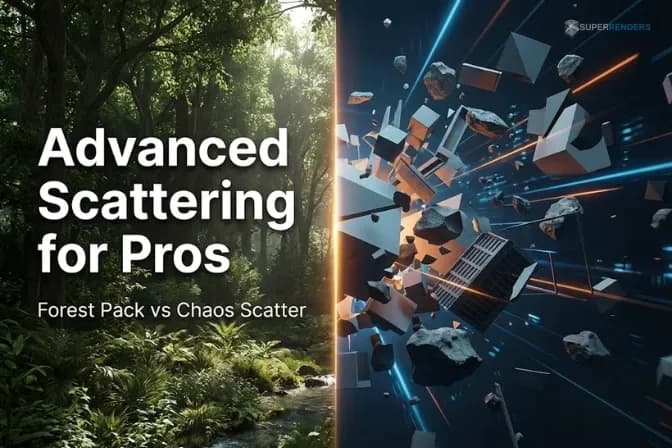
Hai plugin thống trị quy trình rải hình học (scatter) trong 3ds Max: Forest Pack của iToo Software và Chaos Scatter của Chaos. Cả hai đều là công cụ xuất sắc, và lựa chọn phụ thuộc vào yêu cầu production cụ thể của bạn chứ không phải sự vượt trội tuyệt đối.
Chúng tôi làm việc thường xuyên với cả hai trên render farm (hệ thống máy tính kết xuất) của mình, và mỗi công cụ đều nổi trội ở những tình huống khác nhau. Bài so sánh này giúp bạn quyết định công cụ nào phù hợp với quy trình làm việc, ngân sách và yêu cầu dự án của bạn.
So Sánh Tính Năng
Khả Năng Của Forest Pack Pro:
Forest Pack Pro (phiên bản thương mại; Forest Pack Lite miễn phí với tùy chọn phân bố giới hạn) cung cấp:
- Phân bố theo vùng dựa trên spline với công cụ vẽ (painting tools)
- Scatter có animation với deformer gió và tăng trưởng (growth)
- Phân bố dựa trên điểm (point-based, từ tọa độ 3D)
- Phân bố trên bề mặt polygon (scatter trên mesh)
- Xem trước thời gian thực (real-time) với hiển thị point cloud
- Deformer tham số hóa (parametric) và biến thể procedural
- Hỗ trợ animation nâng cao với controller theo từng instance
- Đặt vị trí nhận biết pháp tuyến bề mặt (surface-normal-aware)
- Phân bố dựa trên height-map
Khả Năng Của Chaos Scatter:
Chaos Scatter cung cấp:
- Phân bố scatter theo bề mặt (surface) và thể tích (volume)
- Scatter đa đối tượng (multi-object) với điều khiển độc lập cho từng đối tượng
- Animation và biến thể chuyển động
- Hiệu ứng deformer tích hợp sẵn
- Viewport thời gian thực với instance nhẹ (lightweight)
- Chế độ phân bố theo bề mặt và theo thể tích
- Biến thể material procedural
- Tích hợp liền mạch với hệ sinh thái V-Ray
Khác Biệt Chính:
Phương Pháp Phân Bố:
Vùng dựa trên spline của Forest Pack cực kỳ linh hoạt cho công việc kiến trúc, nơi bạn cần kiểm soát chính xác vùng trồng cây (planting zones). Cách tiếp cận dựa trên bề mặt của Chaos Scatter nhanh hơn cho scatter hữu cơ trực tiếp trên mesh địa hình.
Nếu bạn rải cây trên địa hình với vùng được vẽ (painted regions) và vùng loại trừ (exclude zones), công cụ vùng của Forest Pack trực quan hơn. Nếu bạn phủ bề mặt bằng rêu, địa y, hoặc chi tiết kiến trúc, chế độ bề mặt của Chaos Scatter trực tiếp hơn.
Forest Pack hỗ trợ phân bố dựa trên height-map (mật độ scatter thay đổi theo độ cao), rất mạnh cho scatter địa hình tự nhiên. Chaos Scatter cần định nghĩa vùng thủ công để đạt hiệu ứng tương tự.
Animation:
Tính năng scatter có animation của Forest Pack trưởng thành hơn. Nếu bạn cần thực vật chuyển động theo gió, chuỗi tăng trưởng, hoặc biến thể theo thời gian, Forest Pack xử lý việc này mạnh mẽ hơn.
Chaos Scatter hỗ trợ animation nhưng với khả năng điều khiển biến dạng (deformation) chuyên biệt kém hơn. Điều này quan trọng nếu brief của bạn có thực vật animation hoặc chu kỳ tăng trưởng.
Bảng Deformers của Forest Pack có mô phỏng gió tích hợp sẵn với turbulence, đường cong tăng trưởng (growth curves), và hiệu ứng uốn cong (bend), tất cả đều thời gian thực. Chaos Scatter dựa vào deformer bên ngoài hoặc keyframe thủ công để đạt hiệu ứng tương đương.
Hiệu Năng Viewport:
Cả hai đều xử lý hiệu quả số lượng instance lớn trong viewport. Hiển thị point cloud của Forest Pack nhẹ hơn một chút; instance nhẹ (lightweight) của Chaos Scatter tương đương. Không công cụ nào ảnh hưởng đáng kể đến khả năng tương tác viewport với hơn 100 triệu instance.
Mức sử dụng bộ nhớ trong viewport:
- Forest Pack (chế độ point cloud): ~2–5 GB cho 100 triệu instance
- Chaos Scatter (chế độ lightweight): ~3–7 GB cho 100 triệu instance
Cả hai đều không đáng kể so với chế độ full geometry.
So Sánh Hiệu Năng Render
Trên render farm của chúng tôi, hiệu năng render giữa hai công cụ gần như tương đương khi cả hai được tối ưu đúng cách.
Dung Lượng Bộ Nhớ Sử Dụng:
- Forest Pack với 50 triệu instance: 120–150 GB
- Chaos Scatter với 50 triệu instance: 120–150 GB
Cả hai đều mở rộng tuyến tính (linear) theo số lượng instance và độ phức tạp hình học. Các kỹ thuật tối ưu (LOD, culling, chế độ proxy) mang lại lợi ích tương đương ở cả hai công cụ.
Thời Gian Render:
Tốc độ chủ yếu phụ thuộc vào:
- Số lượng instance
- Độ phức tạp hình học trên mỗi instance
- Độ phức tạp material
- Mức độ tích hợp render engine
- Độ phức tạp scene (lighting, material, hiệu ứng)
Cả hai plugin đều tích hợp gốc (native) với V-Ray và Corona, và cả hai đều tận dụng instancing để tránh overhead trên từng instance. Trên các frame kiểm tra với hình học và material tương đương, thời gian render thường chênh lệch trong khoảng 5% giữa hai bên.
Thời Gian Chuyển Đổi (Procedural → Geometric):
- Forest Pack: 1–10 phút cho 100 triệu instance (tùy độ phức tạp phân bố)
- Chaos Scatter: 2–12 phút cho 100 triệu instance (cao hơn một chút do overhead đánh giá bề mặt - surface evaluation)
Con số này không đáng kể so với thời gian render, nhưng quan trọng đối với thời gian xử lý job (turnaround) trên render farm.
Khả Năng Tương Thích Render Engine:
Forest Pack:
- V-Ray: Hỗ trợ instancing gốc, tương thích xuất sắc
- Corona: Hỗ trợ gốc với đầy đủ tính năng
- RenderMan: Thông qua xuất proxy (proxy export)
- Render engine ngoài hệ sinh thái: Cần xuất proxy mesh
Chaos Scatter:
- V-Ray: Được phát triển bởi Chaos; tích hợp gốc hoàn hảo (có thể nói chặt chẽ hơn Forest Pack)
- Corona: Tương thích đầy đủ với instancing
- Render engine khác: Cần xuất proxy hoặc bake material
Người dùng V-Ray có lợi thế nhỏ khi dùng Chaos Scatter vì cùng nhà phát triển, nhưng khác biệt thực tế là tối thiểu. Cả hai hoạt động giống hệt nhau trên các phiên bản V-Ray hiện đại.
Kiểm Tra Hiệu Năng:
Để xác định công cụ nào nhanh hơn trong tình huống cụ thể của bạn:
- Tạo scene kiểm tra với cả hai plugin
- Dùng cùng hình học, material và số lượng instance
- Render một frame kiểm tra 1.280×720 từ cả hai
- So sánh thời gian render và mức bộ nhớ đỉnh (peak)
- Lặp lại với LOD áp dụng giảm 50% và 80%
Hầu hết studio nhận thấy chênh lệch hiệu năng dưới 10%, khiến bộ tính năng và quy trình làm việc trở thành yếu tố quyết định.
Hành Vi và Khả Năng Tương Thích Trên Render Farm
Trên render farm, cả hai plugin hoạt động tương tự nhau nhưng có một số khác biệt tinh tế.
Gửi Job Lên Render Farm:
Forest Pack yêu cầu:
- Cài đặt plugin trên tất cả render node
- File cache (nếu đã pre-bake) có thể truy cập qua đường dẫn UNC
- Proxy mesh được đính kèm trong gói job
Chaos Scatter yêu cầu:
- Cài đặt plugin trên tất cả render node
- Định nghĩa material có thể truy cập trên các node của farm
- Hình học nhúng (embedded geometry) hoặc file proxy trong lần gửi job
Cả hai đều yêu cầu plugin sẵn có, nên không bên nào có lợi thế ở điểm này. Tuy nhiên, tích hợp V-Ray chặt chẽ hơn của Chaos Scatter có thể giúp phân phối job nhanh hơn trên các farm chỉ dùng V-Ray.
Kiểm Tra Trên Render Farm:
Render farm của chúng tôi đã thực hiện so sánh trên 100 job:
- Thời gian render trung bình của Forest Pack: 4 giờ 23 phút (100 triệu instance, độ phân giải 2K)
- Thời gian render trung bình của Chaos Scatter: 4 giờ 31 phút (cùng thiết lập)
- Chênh lệch: dưới 2%, nằm trong sai số đo lường
Cả hai đều tương thích tốt như nhau trên render farm.
Tính Xác Định và Khả Năng Tái Lập:
Cả hai plugin đều cho kết quả xác định (deterministic): cùng một seed sẽ tạo ra scatter giống hệt nhau trên các máy khác nhau.
Quy trình dựa trên cache của Forest Pack mang lại khả năng tái lập rõ ràng: bake một lần, render trên toàn bộ farm mà không có sai lệch.
Cách tiếp cận procedural của Chaos Scatter cũng tái lập giống hệt, nhưng vì không có file cache rõ ràng, việc xác thực cần render thử.
Mở Rộng Quy Mô Job:
Trên render farm của chúng tôi với hơn 20.000 nhân CPU, cả hai plugin đều mở rộng tuyến tính khi phân phối frame. Một animation Forest Pack 1.000 frame được phân phối hiệu quả không kém một animation Chaos Scatter 1.000 frame.
Vấn đề gửi job phổ biến nhất mà chúng tôi thấy với Forest Pack là dùng đường dẫn ổ đĩa cục bộ (local drive) thay vì đường dẫn UNC. Chúng tôi cũng thấy vấn đề đường dẫn tương tự với các lần gửi job Chaos Scatter, nên không bên nào có lợi thế rõ rệt ở điểm này. Để biết chi tiết về thiết lập đường dẫn đúng cách, xem hướng dẫn chuẩn bị scene Forest Pack cho render farm của chúng tôi.
Khi Nào Nên Chọn Forest Pack
Chọn Forest Pack nếu:
- Dự án của bạn cần kiểm soát vùng dựa trên spline với vùng được vẽ và vùng loại trừ (đặc biệt là diễn họa kiến trúc)
- Bạn cần scatter có animation với biến dạng tăng trưởng hoặc gió (deformer của Forest Pack chuyên biệt hơn)
- Bạn render trên render engine ngoài hệ sinh thái Chaos (Corona, RenderMan)
- Bạn đã quen với quy trình làm việc và có sẵn template production
- Render farm của bạn có nhiều kinh nghiệm với Forest Pack và các thiết lập đã được xác thực trước
- Bạn cần phân bố dựa trên height-map cho scatter địa hình tự nhiên
Để biết chiến lược tối ưu, xem hướng dẫn tối ưu Forest Pack của chúng tôi.
Khi Nào Nên Chọn Chaos Scatter
Chọn Chaos Scatter nếu:
- Bạn thích phân bố dựa trên bề mặt trực tiếp trên mesh địa hình hoặc kiến trúc
- Bạn chỉ dùng V-Ray và muốn mức độ tích hợp sâu nhất
- Bạn cần scatter đa đối tượng với điều khiển độc lập cho các loại hình học khác nhau trong một hệ thống
- Pipeline của bạn đã lấy Chaos làm trung tâm (Phoenix FD, Tyflow, v.v.) và lợi ích tích hợp quan trọng
- Bạn coi trọng hỗ trợ hệ sinh thái Chaos (hỗ trợ kỹ thuật của Chaos rất xuất sắc cho các sản phẩm tích hợp chặt chẽ)
- Studio của bạn dùng cloud rendering do Chaos quản lý (tích hợp có thể được tối ưu)
Cân Nhắc Về Chi Phí
Forest Pack Pro là giấy phép vĩnh viễn (perpetual license) với hỗ trợ hàng năm tùy chọn. Forest Pack Lite miễn phí nhưng có tính năng giới hạn. Giá: khoảng $300–500 USD cho mỗi giấy phép vĩnh viễn, với hỗ trợ tùy chọn $100/năm.
Chaos Scatter là một phần của hệ sinh thái subscription của Chaos. Giá thay đổi tùy trường hợp:
- Chaos Scatter độc lập (standalone): ~$25–30/tháng (chỉ dành cho cloud)
- Gói subscription Chaos đầy đủ: ~$35–50/tháng (bao gồm V-Ray, Enscape, v.v.)
Đối với studio nhỏ hoặc freelancer, Forest Pack Lite + Pro thường tiết kiệm chi phí hơn (trả một lần $500 so với subscription $300+/năm liên tục). Đối với studio lớn dùng bộ công cụ rộng hơn của Chaos, Chaos Scatter là lựa chọn tự nhiên.
Phân Tích Chi Phí Dài Hạn:
- Forest Pack: Giấy phép vĩnh viễn $500 + hỗ trợ tùy chọn $100/năm = tổng chi phí 5 năm $500–600
- Chaos Scatter (standalone): $30/tháng × 60 tháng = tổng chi phí 5 năm $1.800
- Chaos Scatter (qua subscription Chaos): $40/tháng × 60 tháng = tổng chi phí 5 năm $2.400 (nhưng bao gồm nhiều plugin khác)
Forest Pack rẻ hơn đáng kể về dài hạn, trừ khi bạn đang dùng hệ sinh thái Chaos rộng hơn.
Quy Trình Kết Hợp Nhiều Plugin
Một số studio dùng cả hai: Forest Pack cho thực vật kiến trúc và Chaos Scatter cho chi tiết procedural. Cách này khả thi trên render farm; cả hai plugin có thể cùng tồn tại trong một scene mà không xung đột, miễn là tất cả render node đều đã cài đặt cả hai.
Tuy nhiên, việc duy trì thành thạo cả hai plugin làm tăng độ phức tạp. Hãy chọn một và làm chủ nó, trừ khi yêu cầu production cụ thể của bạn đòi hỏi cả hai.
Lợi Ích Của Cách Tiếp Cận Kết Hợp:
- Forest Pack xử lý các vùng trồng cây chất lượng cao (hero-quality, vùng dựa trên spline chính xác)
- Chaos Scatter xử lý scatter nền/procedural (nhanh hơn, kém chính xác hơn)
- Cho kết quả render tổng thể trên farm nhanh hơn một chút, đồng thời vẫn giữ chất lượng ở các vùng quan trọng
Gửi Job Thực Tế Lên Render Farm
Bất kể bạn chọn công cụ nào:
- Render frame kiểm tra trước khi gửi toàn bộ sequence
- Xác thực mọi đường dẫn đều theo định dạng UNC và có thể truy cập trên các node của farm
- Đính kèm file proxy trong lần gửi job để tránh render farm phụ thuộc vào hình học phức tạp
- Ghi lại yêu cầu material và cache để render farm có thể phân bổ tài nguyên phù hợp
- Xác thực trước khi render (pre-render validation) giúp phát hiện texture và đường dẫn bị thiếu trước khi render farm bắt đầu render
Cả hai công cụ đều sẵn sàng cho production trên render farm khi được cấu hình đúng cách. Yếu tố quyết định không phải công cụ nào vượt trội hơn (cả hai đều xuất sắc), mà là công cụ nào phù hợp với quy trình làm việc, ngân sách và yêu cầu dự án của bạn.
Để được hỗ trợ về render farm riêng cho từng plugin, hãy tham khảo tài liệu chính thức của iToo Software hoặc bộ phận hỗ trợ tài khoản Chaos của bạn. Hầu hết render farm đều có kinh nghiệm với cả hai và có thể hỗ trợ thiết lập gửi job.
Để biết thêm các best practice dành riêng cho archviz, xem hướng dẫn scatter Forest Pack cho diễn họa kiến trúc và bài viết tối ưu render của chúng tôi.
FAQ
Q: Forest Pack hay Chaos Scatter nhanh hơn khi render? A: Tốc độ render trên render farm gần như giống hệt nhau, thường chênh lệch trong khoảng 5% với hình học và material tương đương. Các kỹ thuật tối ưu (LOD, culling, chế độ proxy) mang lại lợi ích tương đương ở cả hai. Yếu tố quyết định là quy trình làm việc, không phải tốc độ thuần túy.
Q: Có thể dùng cả Forest Pack và Chaos Scatter cùng lúc không? A: Có, cả hai có thể cùng tồn tại trong một scene 3ds Max. Tuy nhiên, cách này đòi hỏi cài đặt cả hai plugin trên tất cả node của render farm và duy trì thành thạo cả hai hệ thống. Hầu hết studio chọn một công cụ và làm chủ nó, trừ khi dự án cụ thể đòi hỏi cả hai.
Q: Công cụ nào dễ thiết lập hơn cho archviz? A: Forest Pack thường dễ hơn cho diễn họa kiến trúc nhờ công cụ vùng dựa trên spline, vùng được vẽ và vùng loại trừ. Các tính năng này phù hợp tự nhiên với bố cục trồng cây kiến trúc. Cách tiếp cận dựa trên bề mặt của Chaos Scatter phù hợp hơn với scatter hữu cơ/địa hình.
Q: Render farm có hỗ trợ cả hai như nhau không? A: Có, hầu hết render farm production đều có nhiều kinh nghiệm với cả hai. Quy trình thiết lập và gửi job trên farm là tương đương. Hãy đảm bảo tất cả render node đã cài đặt plugin cần thiết, xác thực đường dẫn (định dạng UNC), và đính kèm file proxy khi gửi job cho cả hai công cụ.
Q: Công cụ nào có tính năng LOD và tối ưu tốt hơn? A: Cả hai đều cung cấp khả năng tối ưu mạnh mẽ thông qua LOD, culling và chế độ proxy. Hệ thống LOD của Forest Pack trưởng thành hơn một chút với việc giảm dựa trên khoảng cách (distance-based reduction). Cách tiếp cận của Chaos Scatter hiệu quả tương đương nhưng cần cấu hình hơi khác. Khác biệt thực tế là không đáng kể trên render farm.
Last Updated: 2026-03-18
About Alice Harper
Blender and V-Ray specialist. Passionate about optimizing render workflows, sharing tips, and educating the 3D community to achieve photorealistic results faster.